





Why Do I Suddenly Look Older?
A dermatology-backed look at why skin ages, and where copper peptides, SNAP-8, and microbiome science rank among today's best peptide creams and anti-aging creams.
By Nathan Brown, PhD, Co-Founder and Chief Science Officer, Parallel Health.
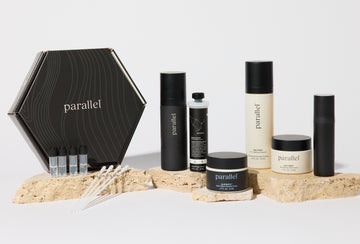
Quick answer: Skin aging shows up through seven observable hallmarks (elasticity, collagen, volume, inflammation, dryness, texture, and pigmentation). The best peptide creams address several at once with clinically dosed actives like GHK-Cu and SNAP-8, and the most effective anti-aging creams now pair those peptides with skin microbiome support, since dysbiosis is a documented driver of collagen breakdown and inflammation. The Blue Biotic™ combines multiple approaches in a single formula, paired with Custom Compounded Rx and Custom Phage Serums.
Many people describe a specific moment when their skin seemed to change almost overnight, not a slow fade but a visible shift in texture, tone, or firmness within a matter of months. That impression tracks with real biology. Skin does not age from a single cause. It responds to a stack of stressors, biological, environmental, and psychological, that build for years before crossing a visible threshold, and it is rarely one factor working alone.
The Mechanisms Behind Sudden Skin Aging
Several overlapping processes drive that shift, and most of them share a common thread: cellular stress. Ultraviolet exposure accumulates DNA damage across decades before visible photoaging appears in a short window. Diet plays a direct role too. A high-sugar diet drives the formation of advanced glycation end products (AGEs), molecules that bind to collagen fibers and disrupt the signaling pathways skin cells use to maintain the extracellular matrix, stiffening tissue and accelerating visible structural damage. Hormonal changes, especially the estrogen decline that begins in perimenopause, are associated with a documented drop in skin collagen content during the first several years of that transition.
Mental and emotional stress leaves its own measurable mark. Chronic psychological stress raises circulating cortisol and epinephrine, and clinical research has linked sustained elevation of these hormones to measurable DNA damage in skin cells, reduced antioxidant capacity, impaired barrier integrity, and a documented increase in fine lines and skin roughness. Environmental exposure compounds the effect: airborne particulate matter and pollution trigger oxidative stress and cellular senescence in skin cells, and this damage interacts synergistically with UV exposure to accelerate visible aging further.
Underneath all of these familiar drivers sits a mechanism most skincare routines overlook entirely: the skin microbiome. As we age, and as we're exposed to more of the stressors above, the diversity and balance of the bacteria living on our skin shift, a process known as dysbiosis. That imbalance drives chronic, low-grade inflammation, sometimes called inflammaging, which activates matrix metalloproteinases (MMPs), enzymes that break down collagen and elastin. A 2025 study found that skin microbiome composition is directly linked to how old skin appears, independent of a person's actual age. The visible result shows up as reduced elasticity, deeper static wrinkles, uneven pigmentation, and a duller overall complexion, changes that most topical products treat at the surface without touching the microbial, metabolic, and inflammatory drivers underneath.
The 7 Hallmarks of Skin Aging™
General aging research has proposed molecular mechanisms shared across every tissue in the body, later adapted specifically to skin biology. Parallel Health's clinically focused framework, the 7 Hallmarks of Skin Aging™, translates that underlying biology into seven observable categories:
- Loss of elasticity
- Collagen loss
- Volume loss
- Inflammation
- Dryness
- Uneven skin texture
- Dyspigmentation
These hallmarks are the visible endpoints of the stressors described above: cortisol-driven oxidative stress, glycation-stiffened collagen, and pollution-triggered senescence all surface as some combination of these seven, and dysbiosis in particular runs underneath several of them at once. That is why the inflammation hallmark is treated as an upstream driver rather than a downstream symptom in this framework.
Engineering the Microbiome to Slow Skin Aging
Skin microbiome testing identifies which bacterial species are overrepresented or missing, generating a Quantitative Microbial Analysis™ and Metabolic Microbiome Profiling™ specific to an individual's skin. From there, each hallmark gets addressed at the level it actually operates.
The Blue Biotic™ combines prebiotic and postbiotic ingredients with a five-peptide complex, including copper peptides (GHK-Cu) and SNAP-8, to work across several hallmarks at once, rebalancing the microbial ecosystem that drives inflammation while directly supporting collagen and elastin synthesis. In a controlled study, GHK-Cu increased collagen and elastin production while measurably reducing facial wrinkle depth, addressing collagen loss and loss of elasticity together. SNAP-8 works through a distinct mechanism, softening the muscle contractions behind expression lines to improve uneven skin texture rather than rebuilding structural collagen.
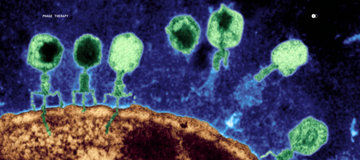
Custom Active Phage Serum targets the inflammation hallmark directly. It uses nano-microbes selected against the specific overgrown bacterial strains identified on an individual's skin, clearing pathogenic species while leaving beneficial commensals intact, a level of precision broad-spectrum antibiotics cannot match.
Custom Compounded Prescriptions can be crafted to your needs specifically. They are formulated around whichever hallmark needs the most support for a given patient. A compounded anti-aging prescription might combine prescription-strength tretinoin, niacinamide, and sodium hyaluronate in a single high-bioavailability base, with tretinoin working at the level of gene expression to stimulate collagen synthesis, accelerate cell turnover, and correct pigmentation irregularities, while niacinamide reinforces the barrier and buffers the irritation tretinoin can otherwise cause. For a patient dealing mainly with dyspigmentation, that same compounding process can instead prioritize actives suited to pigment correction; for someone further along in volume loss, it can lean toward ingredients that support dermal thickness. Because each prescription is compounded to order rather than pulled from a fixed formula, custom compounded Rx is the layer built to flex across all seven hallmarks depending on where a given patient actually needs it, rather than asking one formula to do that work for everyone.
Layering microbiome-targeted interventions with proven peptide chemistry, alongside managing the stress, diet, and environmental exposures that feed cellular damage in the first place, addresses all seven hallmarks together rather than chasing one symptom at a time, slowing the rate of visible aging rather than temporarily masking it.
How The Blue Biotic™ Compares to a Typical Peptide Cream
Most peptide creams on the market target one hallmark at a time, usually collagen or texture, and none address the microbiome directly.

The best peptide cream for one person's skin is not necessarily the best for another's, which is the core argument for testing before treating rather than choosing a cream off a shelf.
Frequently Asked Questions
Do stress, diet, and pollution really affect how fast skin ages? Yes. Chronic psychological stress raises cortisol and epinephrine to levels shown to damage skin cell DNA and barrier function, a high-sugar diet accelerates collagen-damaging glycation, and airborne pollution drives oxidative stress and cellular senescence that compounds UV damage. These factors act alongside, and often reinforce, microbiome dysbiosis.
Why does skin aging sometimes feel sudden rather than gradual? Aging mechanisms such as glycation, hormonal decline, chronic stress, and cumulative UV or environmental damage build for years before crossing a visible threshold, so changes in collagen density or skin tone can appear abrupt even though the underlying biology has been shifting for a long time.
What are the 7 Hallmarks of Skin Aging™? Parallel Health's framework organizes visible skin aging into seven observable categories: loss of elasticity, collagen loss, volume loss, inflammation, dryness, uneven skin texture, and dyspigmentation. Addressing skin aging fully means treating all seven rather than focusing on a single symptom.
What is skin microbiome dysbiosis, and how does it relate to aging? Dysbiosis is an imbalance in the bacteria living on the skin. As this balance shifts with age and cumulative stress exposure, it can trigger chronic low-grade inflammation that accelerates the breakdown of collagen and elastin.
Can restoring the skin microbiome actually slow visible aging? A 2025 study found skin microbiome composition predicts how old skin looks independent of chronological age, and restoring balance is linked to reduced inflammation and better barrier function, both of which support firmer, more resilient skin over time.
How is the Blue Biotic™ different from a standard anti-aging serum? Blue Biotic™ is formulated around an individual's own skin microbiome testing results, pairing microbiome-supportive ingredients with peptides like copper peptides and SNAP-8 that have documented effects on collagen synthesis, wrinkle depth, and skin texture.
What makes Custom Active Phage Serum different from antibiotics? Antibiotics tend to eliminate bacteria broadly, including beneficial species. Custom Active Phage Serum uses nano-microbes matched to a person's specific overgrown bacterial strains, leaving the rest of the skin's microbial ecosystem undisturbed.
What is the best peptide cream for anti-aging? The strongest evidence points to formulas combining GHK-Cu and SNAP-8 at clinically studied concentrations, since the two work through separate mechanisms, collagen and elastin synthesis versus muscle contraction, rather than duplicating each other. A cream that also addresses microbiome dysbiosis, rather than peptides alone, targets more of the seven hallmarks of skin aging at once.
Is a personalized peptide cream better than an off-the-shelf one? For most people, yes, in the sense that skin microbiome composition varies significantly between individuals, and a cream formulated around an individual's own test results can address their specific combination of hallmarks rather than a generic average.
References
- Jin S, Li K, Zong X, Eun S, Morimoto N, Guo S. Hallmarks of Skin Aging: Update. Aging Dis. 2023;14(6):2167-2176. doi:10.14336/AD.2023.0321
- López-Otín C, Blasco MA, Partridge L, Serrano M, Kroemer G. The Hallmarks of Aging. Cell. 2013;153(6):1194-1217. doi:10.1016/j.cell.2013.05.039
- Xu YN, et al. Skin microbiome as a signature of premature ageing appearance. Br J Dermatol. 2025. doi:10.1093/bjd/ljaf098
- Ratanapokasatit Y, et al. How microbiomes affect skin aging. Life. 2022;12:936.
- Soon SL, Brown N. Dermatology Disruptors: Next-Generation Skin Microbiome Testing and Bacteriophage Therapy. The Dermatologist. 2024;32(9).
- Woo TE, Sibley CD. The emerging utility of the cutaneous microbiome in the treatment of acne and atopic dermatitis. J Am Acad Dermatol. 2020;82(1):222-228. doi:10.1016/j.jaad.2019.08.078
- Palacios-Garcia L, et al. Development of a topical bacteriophage gel targeting Cutibacterium acnes. Skin Health Dis. 2022;2(3):e125.
- Pujos M, Chamayou-Robert C, Parat M, Bonnet M, Couret S, Robiolo A, Doucet O. Impact of Chronic Moderate Psychological Stress on Skin Aging: Exploratory Clinical Study and Cellular Functioning. J Cosmet Dermatol. 2024. doi:10.1111/jocd.16634
- Li WZ, Liu XX, Shi YJ, Wang XR, Li L, Tai ML, Yi F. Unveiling the mechanism of high sugar diet induced advanced glycosylation end products damage skin structure via extracellular matrix-receptor interaction pathway. J Cosmet Dermatol. 2024;23(7):2496-2508. doi:10.1111/jocd.16295
- Martic I, Jansen-Dürr P, Cavinato M. Effects of Air Pollution on Cellular Senescence and Skin Aging. Cells. 2022;11(14):2220. doi:10.3390/cells11142220
- Badenhorst T, Svirskis D, Merrilees M, Bolke L, Wu Z. Effects of GHK-Cu on MMP and TIMP Expression, Collagen and Elastin Production, and Facial Wrinkle Parameters. J Aging Sci. 2016;4(2):166. doi:10.4172/2329-8847.1000166
- Schagen SK. Topical Peptide Treatments with Effective Anti-Aging Results. Cosmetics. 2017;4(2):16. doi:10.3390/cosmetics4020016