





How Over-Exfoliating with AHA/BHA Toners and Peel Pads Can Age Your Skin
by Parallel Health Team
Short answer: Overusing or layering AHA/BHA toners, peel pads, and exfoliants can prematurely age your skin. Too much exfoliation weakens the skin barrier, drives chronic inflammation that breaks down collagen, increases UV sensitivity, and disrupts the skin microbiome. Some people carry skin bacteria that exfoliate naturally, so test what your skin needs before adding acids, and wear SPF daily.
Many people in our community ask whether Parallel products work with the skincare they already use. In most cases, they do. Parallel products fit well into an existing routine, as long as your other products are high quality and free of harsh ingredients like parabens.
One category we ask people to watch closely is AHA/BHA toners, peel pads, and other chemical exfoliants. Used in moderation, they can improve texture and tone. Used daily or stacked together, they can wear down your skin and speed up aging. Here's why.
What AHAs and BHAs Do
Alpha hydroxy acids (glycolic, lactic, mandelic) are water-soluble and loosen the bonds between dead cells on the skin's surface. Beta hydroxy acid (salicylic acid) is oil-soluble and works inside pores.¹
Problems start with the stack. A trending routine might include a glycolic toner in the morning, a salicylic peel pad at night, an exfoliating serum, a weekly at-home peel, and retinol on top. Each step removes more of the outer layer than skin can rebuild.
Five Ways Over-Exfoliation Ages Skin
1. Barrier breakdown. The stratum corneum holds in water and keeps out irritants.² Repeated acid exposure depletes its lipids and increases water loss. Dehydrated skin shows fine lines sooner and looks dull.
2. Chronic inflammation. When the barrier is damaged, skin cells release inflammatory signals such as IL-1α.³ Repeated every day, this becomes the persistent, low-grade inflammation researchers call inflammaging.⁴ Inflammation activates enzymes called matrix metalloproteinases (MMPs) that break down collagen and elastin, the same pathway behind UV photoaging.⁵
3. Higher UV sensitivity. In an FDA-sponsored study, four weeks of 10% glycolic acid increased UV-induced sunburn cells by about 18% and lowered the skin's redness threshold by about 13%.⁶ The FDA recommends a sunburn alert on AHA product labels.⁷ Since UV is the largest driver of visible aging, an exfoliant that makes skin burn more easily compounds the damage when sunscreen is skipped.
4. A disrupted skin microbiome. Healthy skin has a surface pH below 5, which supports its resident microbes.⁸ Barrier damage and pH swings shift that community, and the barrier and microbiome depend on each other.⁹ A destabilized microbiome can leave skin more reactive and prone to redness and breakouts.
5. Pigmentation. Repeated irritation can cause post-inflammatory hyperpigmentation, especially in medium and deeper skin tones.¹⁰ Uneven tone makes skin look older.
Signs You're Overdoing It
- Stinging or burning from gentle products or plain moisturizer
- Tight, shiny skin that looks polished but feels raw
- Persistent redness, flaking, or patchy dryness
- New breakouts or small bumps
- Dark marks that linger after irritation
Test What Your Skin Needs Before You Exfoliate
Exfoliation needs vary from person to person. Through our sequencing work, we've found that some people carry skin bacteria that act as natural exfoliants. For them, added exfoliating ingredients may be unnecessary and can tip skin into irritation.
We encourage people to test before adding an exfoliant. Parallel's skin microbiome testing uses whole-genome shotgun sequencing to identify the organisms living on your skin and what they're doing. Your results include a Quantitative Microbial Analysis™ and Metabolic Microbiome Profiling™, showing how much exfoliation your skin needs, the microbial factors behind how it's aging, and a baseline to track whether your routine is helping. This is the foundation of Microbiome Dermatology™.
If You Do Need an Exfoliant
If testing shows your skin needs extra exfoliation, use one product no more than two to three times a week, with rest nights in between. Avoid using acids and retinoids on the same night. Wear broad-spectrum SPF 30 or higher every day. If you already see signs of damage, pause all acids for two to four weeks while your barrier recovers.
Repair Your Barrier With Parallel Health
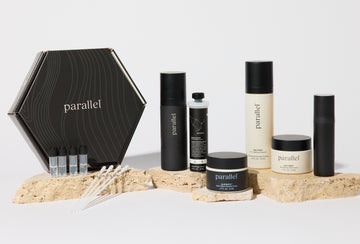
If your skin already shows signs of over-exfoliation, recovery starts with rebuilding the barrier. Parallel Health's Skin Barrier Biotic™ Cream is formulated in-house by our scientific team for this purpose. Foundational ceramides replenish the lipids that acids strip away, allantoin soothes irritated skin, and tripeptide-38 supports collagen and the skin's structural matrix. Lactobacillus probiotics help bring the skin microbiome back into balance as the barrier heals.
Frequently Asked Questions
Does everyone need a chemical exfoliant? No. Parallel's sequencing has found that some people carry skin bacteria that act as natural exfoliants, so added acids may do more harm than good for them. Skin microbiome testing can show what your skin needs before you add an exfoliant.
How often should I use an AHA or BHA toner? It depends on your skin. People whose skin bacteria already exfoliate may not need one at all. If testing shows you do, two to three times a week is a sensible ceiling, and sensitive skin may tolerate only once a week. Daily use of multiple exfoliants raises the risk of irritation.
Can I use glycolic acid and salicylic acid together? Some products combine them at low concentrations. Layering separate full-strength products every day increases irritation, so alternating nights is safer.
Can over-exfoliation cause wrinkles? Overuse can contribute to visible aging through dehydration, chronic inflammation, collagen breakdown, and increased UV sensitivity.
How long does a damaged skin barrier take to heal? Mild over-exfoliation often improves within two to four weeks after stopping acids and switching to gentle care with barrier-supporting ingredients such as ceramides and allantoin. See a dermatologist if symptoms persist.
Does over-exfoliation affect the skin microbiome? Yes. Stripping the barrier and shifting skin pH can change which microbes thrive, which may increase sensitivity and breakouts. Skin microbiome testing can show how your microbial community looks.
Scientific References
- Kornhauser A, Coelho SG, Hearing VJ. Applications of hydroxy acids: classification, mechanisms, and photoactivity. Clin Cosmet Investig Dermatol. 2010;3:135-142.
- Elias PM. Stratum corneum defensive functions: an integrated view. J Invest Dermatol. 2005;125(2):183-200.
- Wood LC, Elias PM, Calhoun C, et al. Barrier disruption stimulates interleukin-1 alpha expression and release from a pre-formed pool in murine epidermis. J Invest Dermatol. 1996;106(3):397-403.
- Franceschi C, Bonafè M, Valensin S, et al. Inflamm-aging: an evolutionary perspective on immunosenescence. Ann N Y Acad Sci. 2000;908:244-254.
- Fisher GJ, Kang S, Varani J, et al. Mechanisms of photoaging and chronological skin aging. Arch Dermatol. 2002;138(11):1462-1470.
- Kaidbey K, Sutherland B, Bennett P, et al. Topical glycolic acid enhances photodamage by ultraviolet light. Photodermatol Photoimmunol Photomed. 2003;19(1):21-27.
- U.S. Food and Drug Administration. Guidance for Industry: Labeling for Topically Applied Cosmetic Products Containing Alpha Hydroxy Acids as Ingredients. 2005.
- Lambers H, Piessens S, Bloem A, Pronk H, Finkel P. Natural skin surface pH is on average below 5, which is beneficial for its resident flora. Int J Cosmet Sci. 2006;28(5):359-370.
- Byrd AL, Belkaid Y, Segre JA. The human skin microbiome. Nat Rev Microbiol. 2018;16(3):143-155.
- Davis EC, Callender VD. Postinflammatory hyperpigmentation: a review of the epidemiology, clinical features, and treatment options in skin of color. J Clin Aesthet Dermatol. 2010;3(7):20-31.