







Peptides are, without question, the most talked-about ingredient category in skincare right now. Walk down any beauty aisle or scroll any skincare feed and you'll see "peptide complex," "peptide-infused," or "active peptides" on a plethora of products. But the word "peptide" has become a catch-all label for a category of ingredients that varies wildly in quality, concentration, and evidence.
This guide breaks down what peptides actually are, which ones have real clinical data behind them, which newer peptides are riding a wave of hype without much research to back it up yet, and (maybe most importantly) how to tell whether a peptide product is actually formulated to work, or just formulated to look good on an ingredient list.
What Is a Peptide, Actually?
A peptide is simply a short chain of amino acids linked together by peptide bonds. Proteins in your skin, like collagen, elastin, and keratin, are just long chains of amino acids. When those chains break down into shorter fragments (either naturally, through enzymatic activity, or synthetically, in a lab), you get peptides. Depending on their length and structure, they carry different biological "messages" to skin cells.
In cosmetic chemistry, peptides are generally grouped into four functional categories:
Signal peptides tell fibroblasts (the cells that produce collagen and elastin) to ramp up production, essentially mimicking the message your skin sends itself after an injury or during youthful skin turnover. Matrixyl 3000 and copper peptides fall into this category.
Neurotransmitter-inhibiting peptides work more like a topical, temporary version of a neuromodulator: they interfere with the signaling that causes repetitive muscle contraction, which is theorized to soften the look of expression lines. SNAP-8 and Argireline (acetyl hexapeptide-8) are the best-known examples.
Carrier peptides deliver trace minerals like copper or manganese into the skin, where those minerals act as cofactors for enzymes involved in wound healing and collagen crosslinking. GHK-Cu is technically both a signal peptide and a carrier peptide.
Enzyme-inhibiting peptides block the enzymes (like collagenase and elastase) that break down existing collagen and elastin, essentially slowing degradation rather than stimulating new production.
Understanding which category a peptide falls into matters because it tells you what it can realistically do. A neurotransmitter-inhibiting peptide isn't going to rebuild your collagen matrix, and a signal peptide isn't going to soften a frown line the way a muscle-relaxing peptide might.
The Established Players: What's Actually Been Studied
Copper Peptides (GHK-Cu)
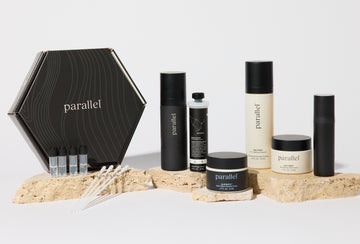
GHK-Cu, or copper tripeptide-1, is one of the more extensively researched peptides in cosmetic dermatology, with a research history going back to the 1970s when biochemist Loren Pickart first isolated the naturally occurring human peptide GHK and observed its role in wound healing. GHK-Cu has documented effects on collagen and glycosaminoglycan synthesis, antioxidant activity, and anti-inflammatory signaling, and it has been studied in both wound-healing and cosmetic contexts (Pickart & Margolina, 2018; Pickart, 2022). It is one of the key ingredients in the Blue Biotic™ Multi-Effect Peptide Cream and what gives it a beautiful blue color.
The catch with copper peptides isn't whether the molecule works, it's formulation. Copper is a reactive metal ion, which means an unstable or poorly chelated copper peptide formula can generate free radicals instead of neutralizing them, and can also react badly when combined with vitamin C or certain acids. A well-formulated copper peptide product accounts for chelation and pH from the outset rather than just tossing GHK-Cu into a base and calling it done. It's why we chelate the copper peptide in Blue Biotic™ from the outset rather than treating chelation as an afterthought.
SNAP-8 (Acetyl Octapeptide-3)
SNAP-8 is a synthetic peptide that reduces wrinkles as a topical paralytic, similar to but gentler than Botox.
A protein called SNAP-25 enables your muscles to contract, like the muscles around your mouth or eyes, causing wrinkles as we age. Botox is an enzyme that cuts SNAP-25 apart, so the nerve ending can't release the signal at all until it rebuilds new SNAP-25, which takes months. SNAP-8 doesn't cut anything. It just wedges itself onto SNAP-25 and gets in the way, making the release weaker rather than stopping it completely. That's why SNAP-8's effect is milder. With SNAP-8, nothing is destroyed.
When people hear "botox in a jar," they may be skeptical, but the data shows that SNAP-8 has been shown to reduce wrinkles by 63% in 28 days. This is why we decided to include a meaningful amount in the Blue Biotic™ Multi-Effect Peptide Cream.
Matrixyl 3000 (Palmitoyl Tripeptide-1 + Palmitoyl Tetrapeptide-7)
Matrixyl 3000 pairs palmitoyl tripeptide-1 with palmitoyl tetrapeptide-7. The tripeptide is a palmitoylated fragment of procollagen designed to stimulate fibroblasts to produce more collagen, elastin, and glycosaminoglycans, while the tetrapeptide is targeted more at calming inflammatory signaling associated with chronic low-grade "inflammaging."
The original palmitoyl pentapeptide research, the precursor to what became the Matrixyl line, was published in a peer-reviewed journal and showed measurable improvement in photoaged facial skin after 12 weeks of twice-daily use, including reductions in wrinkle depth and improved skin density (Robinson et al., 2005, International Journal of Cosmetic Science). That's genuinely one of the better-documented peptide studies in the category, and it's part of why Matrixyl compounds show up in so many formulations, including Parallel's Blue Biotic™.
The New Wave: What's Gaining Hype (and What the Evidence Actually Supports)
A newer crop of peptide-adjacent ingredients has been surging in skincare marketing over the last year or two. Some of it is genuinely promising; some of it simply doesn't yet have data.
PDRN (polydeoxyribonucleotide) and PN (polynucleotides) are technically DNA fragments rather than peptides, typically derived from salmon sperm, but they're being marketed alongside peptides constantly and are often confused with them. There's a real and growing body of research, mostly out of Korea, where PDRN injectables have been used clinically for years, suggesting PDRN can support tissue repair and dermal regeneration through adenosine A2A receptor activation (a completely different mechanism from signal peptides). The injectable and in-clinic evidence is more mature than the topical evidence; topical PDRN's ability to actually penetrate skin at meaningful concentrations is still an open question researchers are actively working through.
Exosomes are extracellular vesicles, not peptides, but they've become the buzziest ingredient in the "beyond peptides" conversation. The evidence problem here is more serious: as of 2026, the FDA has not approved any exosome product for topical or injectable cosmetic use, and the agency has issued warnings about unapproved exosome products in aesthetic practices. If you see "exosomes" marketed in an over-the-counter cream, that's a strong signal to read the label and the company's actual substantiation carefully. This is one of the areas where hype has clearly outrun regulatory and clinical reality.
Palmitoyl tripeptide-38 (marketed as Matrixyl Synthe'6) is a newer signal peptide that influences multiple structural components at once, including collagen, elastin, laminin, fibronectin, and hyaluronic acid, rather than just one pathway. It's a logical evolution of the Matrixyl chemistry and mechanistically plausible, but it is a newer molecule and does not have as much data as its predecessors. At Parallel, we use this promising peptide alongside the highest quality and very well-documented peptides Matrixyl 3000, SNAP-8, and GHK-Cu to work synergistically in the Blue Biotic™.
Copper peptide "dupes" and plant-derived peptide blends, bioengineered peptides derived from rice, soy, or wheat proteins, are being marketed as gentler or more "clean" alternatives to synthetic peptides. Some of these have legitimate small-scale data behind them; many are simply riding the plant-based trend without much independent verification. Treat "plant-derived" as a formulation choice, not automatically a sign of superior efficacy.
The takeaway on the new wave: peptide science is moving fast, and some of what's hyped today will be well-substantiated in five years. But "trending" and "clinically proven" are two different bars, and it's worth knowing which one an ingredient has actually cleared before paying a premium for it.
How to Tell If a Peptide Product Is Actually Formulated to Work
This is the part most ingredient lists won't tell you, and it can matter more than which peptides are on the label.
pH compatibility. Many peptides are sensitive to pH extremes. A product formulated to sit at a low pH for a different active ingredient (like a high-strength vitamin C or an AHA) can denature or destabilize peptides in the same bottle before you ever open it.
Chelation and oxidation protection, especially for copper peptides. Free copper ions are pro-oxidant; properly chelated copper peptide is not. A serum that changes color, develops an odd smell, or turns cloudy over time is very likely showing you active degradation in real time.
Concentration and position on the ingredient list. Peptides are usually included at low percentages, but "low" still has a meaningful range. If a peptide is listed near the very end of a long ingredient list, behind a dozen preservatives and fragrance components, it's likely present at a cosmetically insignificant "fairy dust" concentration.
Manufacturing date and batch freshness. This is the one almost nobody talks about, and it's arguably the biggest variable of all. Peptides are proteins, and proteins degrade over time even under ideal conditions. A product that was manufactured, shipped to a distribution warehouse, sat on a shelf, then sat in inventory before finally reaching you may have already lost a meaningful percentage of active peptide potency before you even opened the box — with no visible sign that anything changed. Unless a brand can tell you when a batch was made and how it's tested for stability, you're taking that shelf life on faith.
Why We Manufacture the Way We Do
At Parallel, we build our peptide formulations, including Blue Biotic™, our multi-effect peptide cream, by compounding in small batches in our own lab rather than outsourcing to a contract manufacturer that produces large runs for warehouse storage. That means the copper peptide, Matrixyl 3000, and SNAP-8 in every batch are formulated, tested, and shipped close to the point of manufacture, instead of sitting in a distribution center for months before it ever reaches a shelf.
We also engineered the formula specifically for stability rather than assuming peptides would hold up on their own: the copper is properly chelated, the pH is set to be compatible with tretinoin for people layering routines, and the formula is validated to stay stable for 6+ months at room temperature and 12+ months refrigerated. Those are figures we can state because we've actually tested for them, not because we're hoping for the best. If you've ever wondered why a peptide cream "worked great" for the first jar and then seemed to do nothing for the next one, formula freshness and stability testing are very often the answer.
Peptides are one of the more genuinely evidence-backed categories in skincare, but only when they're formulated with the same rigor as the research they're based on.
Frequently Asked Questions
Are topical peptides actually clinically proven to work? Some are, some aren't, and it depends on the specific peptide. GHK-Cu and the Matrixyl 3000 precursor (palmitoyl pentapeptide) have independent, peer-reviewed clinical data behind them. Newer ingredients like exosomes have little to no approved clinical substantiation yet. It's worth checking which bucket a given peptide falls into before assuming "peptide" automatically means "proven."
What's the difference between a signal peptide and a neurotransmitter-inhibiting peptide? Signal peptides (like Matrixyl 3000 and copper peptides) tell skin cells to produce more collagen and elastin. Neurotransmitter-inhibiting peptides (like SNAP-8 and Argireline) temporarily interfere with the signaling behind repetitive muscle movement, similar in concept to a neuromodulator injection but topical and much milder. They target different problems, so many formulations combine both types.
Can I use copper peptides with retinol or vitamin C? Copper peptides and vitamin C are generally best used at different times of day, since vitamin C can destabilize copper peptides and reduce the effectiveness of both. However, if the vitamin C is liposomal, like that in all of Parallel's Custom Active Phage Serums™, then you can use them back to back with no issues. Copper peptides and retinoids can typically be layered if the formula's pH is specifically balanced for that compatibility; check with the brand or formulation notes rather than assuming.
Why would a peptide cream stop working, separate, or change color over time even if I keep using the same product? This usually comes down to formula degradation, not your skin adapting. Peptides are proteins that break down with exposure to light, air, heat, and time. A jar that's been sitting in a warehouse or on a shelf for months before you bought it may have already lost meaningful potency, even if nothing looks different, and in some cases (like copper peptides) you'll actually see it as a color shift or separation before you notice any difference in results. We tell our customers
How long should a well-formulated peptide product stay stable? It depends on the formulation, but a well-engineered peptide cream should be able to state real numbers, not just "store in a cool, dry place." Our Blue Biotic™ formula, for example, is validated for 6+ months at room temperature and 12+ months refrigerated because we've tested for it directly.
References
- Pickart, L. (2022). The potential of GHK as an anti-aging peptide. Aging Medicine (Milton). PMID: 35083444
- Pickart, L., & Margolina, A. (2018). Regenerative and Protective Actions of the GHK-Cu Peptide in the Light of the New Gene Data. Cosmetics, 5(2), 29. MDPI
- Robinson, L. R., Fitzgerald, N. C., Doughty, D. G., Dawes, N. C., Berge, C. A., & Bissett, D. L. (2005). Topical palmitoyl pentapeptide provides improvement in photoaged human facial skin. International Journal of Cosmetic Science, 27(3), 155–160. Wiley
- Blanes-Mira, C., et al. (2002). A synthetic hexapeptide (Argireline) with antiwrinkle activity. International Journal of Cosmetic Science, 24(5), 303–310. Wiley
- Wang, Y., et al. (2013). The anti-wrinkle efficacy of argireline, a synthetic hexapeptide, in Chinese subjects: a randomized, placebo-controlled study. Journal of Cosmetic Dermatology. PMID: 23417317
- Gorouhi, F., & Maibach, H. I. (2009). Role of topical peptides in preventing or treating aged skin. International Journal of Cosmetic Science, 31(5), 327–345. Wiley
- Polydeoxyribonucleotide: A promising skin anti-aging agent, review. ScienceDirect. Link
- IAPAM (2026). Exosome Therapy in Aesthetic Practice: FDA Regulations. Link