





Skin Longevity Ingredients and Supplements: The Science Behind the Hype
by Parallel Health Team
A science-first guide to the topical ingredients redefining skin aging, plus an honest look at which oral longevity supplements actually deliver results for skin.
Estimated read time: 10 minutes
The longevity supplement industry would have you believe that swallowing the right capsule is the path to younger skin. NMN in your morning routine. Mitopure in your smoothie. Resveratrol chased with red wine. The promise is seductive: address aging at the cellular level, and the skin will follow.
Some of that is real science. Most of it, when evaluated specifically for skin outcomes, is wishful thinking.
What the evidence increasingly shows is that skin aging is best addressed where it happens: at the skin itself. A new generation of topical ingredients is delivering results that oral supplements cannot match for skin specifically. At the same time, a handful of oral compounds have genuine, validated mechanisms for improving skin from within.
Part 1: The Topical Skin Longevity Stack
Skin aging is not one process. It is many, operating simultaneously and reinforcing each other. At Parallel Health, this complexity is captured in the 7 Hallmarks of Skin Aging™: loss of elasticity, collagen loss, volume loss, inflammation, dryness, uneven skin texture, and dyspigmentation. These are not seven arbitrary categories; they are the observable endpoints of deeper biological failures, the visible signatures of a system gradually losing its ability to repair, defend, and renew itself.
What makes this framework useful is that it refuses to reduce skin aging to a single cause. Collagen loss and inflammation are not the same problem. Dryness and dyspigmentation share mechanisms but require distinct interventions. Volume loss connects to cellular energy decline. Understanding these seven hallmarks means understanding why a single hero ingredient, however well-evidenced, can only ever be part of the answer.
The most advanced approach to skin longevity targets each hallmark at levels unique to you. The ingredients below represent the most evidence-supported precision approach to all seven currently available.
The Benchmark: Tretinoin (Retinoic Acid)
Before exploring the ingredients in this stack, one compound deserves acknowledgment as the established gold standard against which all topical anti-aging actives are measured: tretinoin.
Tretinoin (retinoic acid) is a prescription-strength vitamin A derivative with more than four decades of randomized controlled trial data behind it. It is the only topical ingredient shown to directly reverse photodamage at the genetic level, stimulating collagen synthesis, accelerating cell turnover, reducing fine lines, improving skin texture, and correcting pigmentation irregularities, all through well-understood molecular mechanisms involving retinoic acid receptors in skin cells. When researchers want to benchmark a new anti-aging ingredient, they compare it to tretinoin. That is the measure of its authority.
The reasons it is often missing from longevity ingredient conversations are practical rather than scientific: tretinoin requires a prescription, can cause initial irritation during the adjustment period, and is frequently unavailable in the compounded, bioavailability-optimized forms that would make it more accessible and better tolerated.
Parallel Health's Custom Compounded Rx (Anti-Aging / Fine Lines & Wrinkles) directly addresses these issues. Available at custom concentrations, Parallel often combines tretinoin with sodium hyaluronate and clinical-grade niacinamide, ingredients that buffer irritation, support the barrier, and amplify tretinoin's anti-aging effects, all in a proprietary peptide base shown to deliver up to 50% greater bioavailability than standard tretinoin formulations, while retaining 90% of actives at one year versus roughly 30% in conventional bases. Every prescription is compounded to order at Parallel Health's pharmacy, not pulled from a shelf.
For those not yet ready for tretinoin, or looking for a daytime complement to a tretinoin-based night routine, the stack below represents the most evidence-backed over-the-counter and cosmeceutical path to skin longevity available. For those who are ready, Parallel Health's dermatologists can prescribe and our specialty pharmacy can compound it precisely for you.
Foundational: Niacinamide (Vitamin B3)
Niacinamide earns a place in any serious skin longevity routine. It is the most evidence-rich topical anti-aging ingredient available today, outside of prescription retinoids.
At 4-5%, niacinamide has been validated in multiple randomized controlled trials to strengthen the skin barrier through ceramide and free fatty acid synthesis, improve hydration by reducing transepidermal water loss, reduce hyperpigmentation through inhibition of melanosome transfer, decrease pore appearance, stimulate collagen production in dermal fibroblasts, and reduce fine lines and sallowness. It works partly by contributing to cellular NAD+ synthesis through the salvage pathway, supporting DNA repair in skin cells and reducing the photo-aging damage that accumulates daily.
Niacinamide is also the rare ingredient that synergizes with nearly everything else in this stack. It enhances peptide efficacy, supports the barrier that makes biotic interventions more effective, and complements the collagen-gene reactivation seen with topical Urolithin A.
Verdict: Non-negotiable
Parallel Health's Blue Biotic™ Multi-Effect Peptide Cream includes niacinamide as a foundational active alongside its peptide and biotic stack, making it one of the few products where this anchor ingredient is formulated at meaningful concentration alongside clinical-grade peptides. For those seeking prescription-strength delivery, Parallel Health also compounds a clinical-grade niacinamide Rx at concentrations beyond what cosmeceutical formulations can achieve, in the same proprietary high-bioavailability base used in the Anti-Aging Rx with tretinoin.
Bacteriophages (Precision Phage Therapy)
Most people think of skin aging as a structural problem: collagen breaks down, elastin weakens, the matrix degrades. That is true. But underneath all of it is an ecological one. As we age, the skin microbiome shifts. Hormones shift. Microbial diversity decreases. Pathogenic species expand. Beneficial commensals retreat. The resulting dysbiosis drives chronic low-grade inflammation, a process researchers now call "inflammaging," that degrades collagen, impairs barrier function, slows cellular renewal, and accelerates every visible sign of aging.
A 2025 landmark study in the British Journal of Dermatology (Xu et al.) provided the first definitive evidence that skin microbiome composition is directly tied to how old we appear, independent of chronological age. The microbiome is not cosmetically incidental. It is mechanistically central to how skin ages.
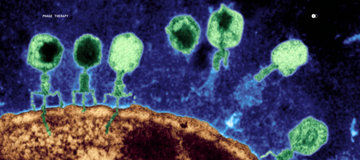
Bacteriophages are nano-microbes that selectively destroy specific bacteria without harming human cells or disrupting surrounding beneficial microbes. Each phage strain targets a specific bacterial species or strain, allowing for surgical correction of microbiome imbalances. Unlike broad-spectrum antibiotics, which kill pathogens and commensals alike and often worsen dysbiosis over time, phages restore microbial balance with precision.
A published phase 1 randomized controlled trial (Palacios-Garcia et al., 2022, Skin Health and Disease) demonstrated significant reduction in facial C. acnes counts using a three-phage cocktail with a strong safety profile. Phages have also been FDA-recognized as generally safe since the early 2000s.
Unlike botulinum toxin or hyaluronic acid filler, which address visible symptoms while leaving the underlying inflammatory biology untouched, precision phage therapy targets the microbial root cause of skin aging.
Verdict: Not a cosmetic trend. This is precision medicine applied to skin longevity, addressing a root cause that most skincare brands don't acknowledge exists.
Personalized phage therapy is available through Parallel Health's MD-03 Protocol™, which combines whole-genome microbiome sequencing with custom-formulated phage cocktails matched to each patient's specific microbial imbalances. This is the only current path to the precision phage intervention the science points toward.
Pre-, Pro-, and Postbiotics (The Biotic Triad)
Phages clear the pathogens. Biotics rebuild what should be there.
Prebiotics selectively feed beneficial skin bacteria, modulating the existing microbiome toward balance without introducing live organisms. Think of them as targeted nutrition that helps commensals outcompete pathogens.
Probiotics are live beneficial bacteria applied topically. Key species including Lactobacillus and Bifidobacterium reinforce the skin's defenses through competitive exclusion, antimicrobial peptide production, and downregulation of pro-inflammatory immune pathways. Clinical evidence links topical probiotics to improved outcomes in acne, atopic dermatitis, eczema, and psoriasis. A 2024 review in the Journal of Cosmetic Dermatology found higher-concentration topical probiotic applications significantly reduce facial wrinkle severity, a direct anti-aging finding.
Postbiotics are the bioactive metabolites produced by beneficial bacteria: short-chain fatty acids, antimicrobial peptides, exopolysaccharides, and cell wall fragments. These have direct anti-inflammatory, barrier-strengthening, and antioxidant effects on skin cells, independent of any live organism. As a category, postbiotics are the most formulation-stable and predictable of the three.
Together, phages clear the field, prebiotics nourish the beneficial community, probiotics reinforce it, and postbiotics supply its bioactive output. This is ecosystem engineering, not cosmetic chemistry.
Verdict: Among the most mechanistically coherent approaches to skin aging available. The gut-skin axis further amplifies these effects: oral biotics improve skin outcomes through systemic anti-inflammatory pathways while topical biotics act directly at the site of aging.
Parallel Health offers two distinct entry points into biotic skincare. The Skin Barrier Biotic™ Cream is designed as a daily microbiome-supportive moisturizer delivering the full pre-, pro-, and postbiotic triad in a formulation optimized for sensitive and reactive skin. The Blue Biotic™ Multi-Effect Peptide Cream integrates pre- and postbiotic elements alongside its clinical-grade peptide stack, for those seeking microbiome support combined with advanced anti-aging actives in a single product.
Copper Peptide GHK-Cu (Copper Tripeptide-1)
Discovered in 1973, GHK was first isolated from young human albumin as a tripeptide that restored youthful protein synthesis to aging liver cells. It is naturally present in human plasma, saliva, and urine, and it declines by over 50% by age 60, coinciding with a measurable decline in tissue regeneration capacity. Topical application is not just adding something new; it is restoring something lost.
GHK-Cu has four decades of research behind it and the strongest clinical evidence of any cosmeceutical peptide. A 12-week double-blind clinical trial in 71 women with photoaging found GHK-Cu facial cream reduced fine line depth by 67%, increased skin density, and reduced sagging, with effects verified by ultrasound and profilometry. In a collagen production comparison, collagen increases were found in 70% of GHK-Cu-treated women versus 50% for vitamin C and 40% for retinoic acid.
The mechanism is multi-layered: GHK-Cu stimulates collagen I, III, and IV synthesis; increases elastin and glycosaminoglycans; modulates MMP expression to remove damaged collagen while inhibiting excess degradation; promotes epidermal stem cell activity; reduces inflammation through TNF-alpha suppression; and modulates gene expression in ways researchers describe as "resetting" cells toward a younger phenotype. It also penetrates the stratum corneum, a non-trivial achievement for a peptide that directly enables its clinical effectiveness.
Verdict: One of the best-evidenced topical anti-aging ingredients in existence. Real clinical data, real mechanism, real penetration. Found in The Blue Biotic™ Multi-Effect Peptide Cream.
Matrixyl 3000 (Palmitoyl Tripeptide-1 + Palmitoyl Tetrapeptide-7)
Matrikines are peptide fragments naturally released when the extracellular matrix is damaged, signaling fibroblasts to repair and rebuild. Matrixyl 3000 mimics this signaling. Its two palmitoylated peptides, palmitoyl tripeptide-1 and palmitoyl tetrapeptide-7, are lipophilic enough to traverse the stratum corneum and reach dermal fibroblasts directly.
In a published 2-month clinical study, Matrixyl 3000 reduced the area occupied by deep wrinkles by 45% and increased skin tonicity by 19%. Palmitoyl tripeptide-1 stimulates collagen synthesis and prevents UVA-induced degradation; palmitoyl tetrapeptide-7 reduces inflammation by decreasing IL-6 secretion after UVB damage. Together, they address both the structural and inflammatory axes of skin aging simultaneously.
Verdict: Well-evidenced, skin-penetrating, and dual-mechanism. Particularly strong in combination with GHK-Cu, which works via complementary rather than redundant pathways. Found in The Blue Biotic™ Multi-Effect Peptide Cream.
Snap-8 (Acetyl Hexapeptide-8 / Argireline)
Expression lines form differently from structural aging. They are carved by repetitive muscle contraction, and no amount of collagen stimulation fully addresses them if the contraction continues unabated.
Snap-8 partially mimics the N-terminal fragment of SNAP-25, a protein in the SNARE complex responsible for neurotransmitter release at the neuromuscular junction. By competing with SNAP-25, it reduces the calcium-dependent signaling that triggers facial muscle contraction, a topical, transient, localized mechanism without injection or paralysis.
Clinical trials show it reduces wrinkle depth and volume at 10% concentration, with effects most pronounced around the eyes and forehead. The mechanism requires continued application, but the clinical evidence is real.
Verdict: The best-evidenced neuro-cosmetic peptide. Works via a mechanistically distinct pathway from collagen-stimulating peptides, making it genuinely additive in a multi-peptide formulation. Found in The Blue Biotic™ Multi-Effect Peptide Cream.
Palmitoyl Tripeptide-38 (Matrixyl Synthe'6)
Where Matrixyl 3000 focuses on collagen I/III and inflammatory control, palmitoyl tripeptide-38 targets a broader suite of matrix components: collagen I, II, and IV, fibronectin, hyaluronic acid, and laminin 5. Its laminin 5 stimulation is particularly relevant; the dermal-epidermal junction, where laminin anchors the skin's layers together, degrades with age in ways that contribute to sagging and the loss of structural definition.
Verdict: A next-generation matrikine with a wider ECM target profile. Complements rather than duplicates Matrixyl 3000 in a complete anti-aging formulation. Found in The Blue Biotic™ Multi-Effect Peptide Cream.
Part 2: Oral Supplements and Skin, Fact or Fiction?
The longevity supplement market is built on a compelling narrative: fix aging at the cellular level, and every organ, including skin, improves. The biology is coherent. The clinical translation for skin, specifically, is more complicated.
Here is a skin-focused evaluation of the most prominent oral longevity ingredients.
Urolithin A (Mitopure), Facts
Six published human placebo-controlled trials support Mitopure's systemic benefits: improved mitochondrial function, increased muscle endurance, reduced inflammaging markers, immune system support. The mechanism, restoring mitophagy across tissues, plausibly benefits skin cells too. Oral Urolithin A reduces systemic inflammaging, which has downstream effects on skin. However, skin is a low-priority destination for systemically circulating compounds. Topical application targets skin cells directly, with independent clinical evidence. Oral Urolithin A is a compelling whole-body longevity supplement that also supports skin indirectly.
Skin verdict: Indirect benefit likely to skin, topical and oral mechanisms are complementary and not identical
Collagen Peptides (Hydrolyzed Collagen), Fact with Caveats
Of all the oral supplements in this article, hydrolyzed collagen has the most direct, skin-targeted human trial data. Multiple randomized controlled trials show oral hydrolyzed collagen at 2.5–10g per day improves skin elasticity, hydration, and dermal collagen density within 8–12 weeks. A 2019 systematic review in the Journal of Drugs in Dermatology covering 11 placebo-controlled trials found significant improvements in both elasticity and hydration. The mechanism holds up too: hydrolysis produces bioactive dipeptides, particularly prolyl-hydroxyproline (Pro-Hyp), which pharmacokinetic studies have confirmed reach the bloodstream and accumulate in skin tissue, where they stimulate fibroblast collagen and hyaluronic acid synthesis.
The caveats matter, though. Much of the trial literature is industry-funded, sample sizes are modest, and the field lacks standardization across collagen types, molecular weights, and hydrolysis profiles. Dose discipline also matters more here than with most supplements: sub-2g studies tend to show weak effects, while stronger trials cluster around 5–10g daily. A well-sourced, third-party tested hydrolyzed collagen at adequate dose is a reasonable addition to a skin longevity protocol — but apply more scrutiny to the label than you would with most categories.
Skin verdict: The strongest skin-specific oral supplement case in this article after Urolithin A and fisetin. The evidence is real; the dose and source standards the marketing rarely mentions are what determine whether it works.
NMN (Nicotinamide Mononucleotide), Promising Orally, Unproven for Skin
Oral NMN reliably raises blood NAD+ and has shown real improvements in physical performance, muscle function, and metabolic markers in multiple human clinical trials. The logic for skin follows: NAD+ decline contributes to skin aging at the cellular level, so raising systemic NAD+ should help.
The problem is clinical evidence. A 2023 review in Advances in Nutrition stated plainly that "there have yet to be any results obtained from human clinical trials examining the skin anti-aging effect by either oral or external NMN intervention." NMN is a credible systemic longevity compound. Its specific benefit for skin in humans remains unproven.
For NAD+-mediated skin benefits that are actually validated, niacinamide applied topically remains the more evidenced choice.
Skin verdict: Plausible mechanism, no human skin trial data. Oral NMN may support general cellular health that benefits skin indirectly; it should not be relied on as a skin-specific intervention.
Fisetin, Real Science, Real Topical Crossover, Fact
Fisetin is the most exciting senolytic in the current landscape. A 2024 human clinical study found oral fisetin reduced senescent peripheral blood mononuclear cells and lowered SASP inflammatory markers. Preclinical data shows it outperforms quercetin, resveratrol, and curcumin combined in senescent cell clearance, achieving over 68% selective removal without harming healthy tissue.
For skin, the mechanism is particularly relevant: senescent cells accumulate in the dermis with age and are a primary driver of collagen degradation. Oral fisetin reduces systemic SASP burden and circulating inflammation. The 2024 Takaya et al. study specifically validated topical fisetin for dermal senescent cell clearance, suggesting a dual strategy where oral fisetin addresses systemic inflammaging while topical application targets the dermis directly.
Skin verdict: Strong oral mechanism with genuine skin implications. One of the few oral longevity compounds where the biology connects clearly to skin aging.
Resveratrol, Real Biology, Limited Skin Evidence
Resveratrol activates SIRT1, a longevity-linked gene regulating DNA repair, inflammation, and metabolic function. It shows some senolytic properties and anti-inflammatory effects. The mechanism for skin benefit is coherent.
The clinical reality is messier. Resveratrol has poor oral bioavailability, is rapidly metabolized before reaching target tissues, and solo human trials show inconsistent results. Supplement quality is also deeply problematic: testing of 30 commercial resveratrol products found widespread contamination and under-dosing. As a topical, it fares better, acting as a potent antioxidant at the skin surface with some evidence for reversing senescence in dermal papilla stem cells exposed to oxidative stress. But dramatic structural skin rejuvenation from either route remains unproven in robust human trials.
Skin verdict: Interesting biology, insufficient clinical evidence specifically for skin. Topical application has more direct logic than oral for skin outcomes.
Spermidine, Promising Foundation, Early-Stage Skin Data
Spermidine is one of the most evolutionarily conserved pro-longevity molecules. Dietary intake links to reduced cardiovascular mortality and better cognitive aging in population studies. Its primary mechanism, autophagy induction, is directly relevant to skin: autophagy declines with age in skin cells, and restoring it supports cellular renewal and barrier function. Human supplementation trials show autophagy biomarker improvements, though the trial base is smaller than NMN or Urolithin A. Skin-specific human data is sparse.
Skin verdict: Mechanistically compelling with broader systemic evidence than skin evidence specifically. A supporting role in a comprehensive longevity protocol, not a standalone skin supplement.
NR (Nicotinamide Riboside), Solid NAD+ Precursor, Developing Skin Story
NR reliably raises NAD+ including in the brain, with an excellent multi-year safety record. Mechanistically similar to NMN, with slightly different cellular uptake kinetics. The case for skin follows the same logic as NMN: systemic NAD+ support may benefit skin cells indirectly. Skin-specific clinical evidence remains limited.
Skin verdict: Credible systemic NAD+ support. Similar to NMN, topical niacinamide remains the more directly evidenced route for skin-specific NAD+-related benefits.
Part 3: How the Full Stack Works Together
When considering Parallel Health's 7 Hallmarks of Skin Aging™, here is how a full protocol might come together, and where Parallel Health's products fit within it:
Loss of elasticity: GHK-Cu, Matrixyl 3000, palmitoyl tripeptide-38, oral collagen: stimulate collagen I/III/IV and elastin synthesis, rebuild the ECM architecture that gives skin its mechanical resilience. Found in: The Blue Biotic™ Multi-Effect Peptide Cream + Custom Anti-Aging Rx (tretinoin stimulates collagen synthesis at the gene expression level, the deepest available mechanism for collagen rebuilding)
Collagen loss: GHK-Cu, Matrixyl 3000, palmitoyl tripeptide-5, topical Urolithin A, oral collagen, oral fisetin: signal fibroblast collagen production across multiple pathways; Urolithin A restores the mitochondrial energy in fibroblasts that fuels that production. Found in: The Blue Biotic™ Multi-Effect Peptide Cream + Custom Anti-Aging Rx (tretinoin is the most clinically validated collagen-stimulating topical available, working via retinoic acid receptors to upregulate procollagen synthesis directly)
Volume loss: Palmitoyl tripeptide-38, GHK-Cu, topical Urolithin A: support hyaluronic acid synthesis and laminin 5 at the dermal-epidermal junction; cellular energy restoration supports the tissue fullness that declines as mitochondria fail. Found in: The Blue Biotic™ Multi-Effect Peptide Cream + Custom Anti-Aging Rx (tretinoin increases dermal thickness and glycosaminoglycan deposition, directly restoring the structural volume lost to photodamage and intrinsic aging)
Inflammation: Phages, pre/pro/postbiotics, palmitoyl tetrapeptide-7, niacinamide, topical fisetin: attacking inflammaging from every angle by clearing the microbial dysbiosis that generates it, neutralizing the senescent cells that sustain it, and suppressing the IL-6 and TNF-alpha pathways that propagate it. Found in: MD-03 Protocol™ (personalized phage therapy) + The Blue Biotic™ Multi-Effect Peptide Cream + Skin Barrier Biotic™ Cream
Dryness: Niacinamide, biotics: restore ceramide and free fatty acid synthesis, reduce transepidermal water loss, strengthen the microbiome-skin interface that regulates barrier permeability. Found in: Skin Barrier Biotic™ Cream (full pre-, pro-, and postbiotic triad) + The Blue Biotic™ Multi-Effect Peptide Cream (pre- and postbiotics + niacinamide)
Uneven skin texture: Snap-8, fisetin (topical or oral), biotics: smooth expression lines via neuromuscular modulation, clear senescent cells that impair surface renewal, and restore the microbial balance that supports healthy cell turnover. Found in: The Blue Biotic™ Multi-Effect Peptide Cream + Skin Barrier Biotic™ Cream + Custom Anti-Aging Rx (tretinoin accelerates cell turnover, clearing the buildup of dead and damaged cells that dulls texture and roughens pore appearance)
Dyspigmentation: Niacinamide and tretinoin: niacinamide inhibits melanosome transfer; tretinoin accelerates the shedding of pigmented cells and disperses melanin granules, together addressing dyspigmentation through two independent and complementary pathways. Found in: The Blue Biotic™ Multi-Effect Peptide Cream (niacinamide) + Custom Hyperpigmentation Rx (various clinical ingredients combined in a single precision formulation)
Systemic support (oral): Urolithin A for whole-body mitophagy and inflammaging reduction; fisetin for systemic senolytic clearance; spermidine for autophagy support across tissues Available through third-party supplement brands. Chat with us for more precise recommendations.
The key insight is that oral supplements work best as amplifiers of a strong topical foundation, not as substitutes for it. Skin is a target organ, and the most direct path to skin longevity runs through it.
For most people, a complete Parallel Health skin longevity protocol takes shape in layers:
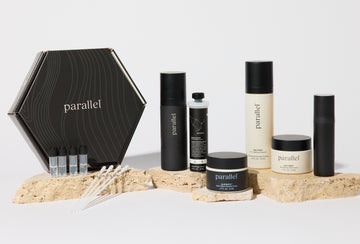
The Skin Barrier Biotic™ Cream provides the daily microbiome-supportive foundation. The Blue Biotic™ Multi-Effect Peptide Cream layers in comprehensive multi-hallmark anti-aging through its clinical-grade peptide and biotic stack. The MD-03 Protocol™ adds personalized phage therapy for those ready to address their skin's microbial imbalances at the genomic level. And for those seeking the most clinically validated anti-aging intervention available, Parallel Health's Custom Compounded Anti-Aging Rx brings prescription-strength tretinoin, combined with niacinamide and sodium hyaluronate in a high-bioavailability peptide base, made to order for each patient. A standalone clinical-grade niacinamide Rx is also available for those who want prescription-strength NAD+ precursor support and barrier reinforcement without tretinoin.
This is what a science-first skin longevity protocol actually looks like: not a single product, but a coordinated set of interventions, each addressing a different hallmark, each backed by independent evidence, and each available through a single precision health platform.
Frequently Asked Questions
Q: If I had to choose between oral and topical longevity ingredients for skin, which would I prioritize? A: Topical, without question. Skin is the target organ, and topical ingredients bypass the metabolic gauntlet that oral supplements face. The ingredients with the strongest skin-specific clinical evidence, niacinamide, GHK-Cu, Matrixyl 3000, phages, and topical Urolithin A, are all topical. Oral supplements can amplify results, particularly Urolithin A and fisetin, but they are supporting players to a strong topical foundation.
Q: What makes phage therapy different from probiotics for skin? A: Probiotics add beneficial bacteria. Phages precisely eliminate specific harmful bacteria first, and that sequence matters. If pathogenic species are dominant, introducing probiotics into that environment is like planting seeds in a field overrun with weeds. Phages clear the field first with strain-level specificity, creating space for commensal repopulation. Together, you are rebuilding the ecosystem rather than adding one species to an imbalanced one.
Q: Can oral NMN improve my skin? A: Probably not in any direct, validated sense. As of 2025, no human clinical trials have confirmed that oral NMN improves skin outcomes. The mechanism is plausible (systemic NAD+ supports cellular function throughout the body), but skin-specific human evidence does not exist. Niacinamide applied topically is the validated, accessible route for NAD+-related skin benefits.
Q: How is Matrixyl 3000 different from GHK-Cu? A: Both stimulate collagen production in fibroblasts, but through distinct mechanisms. GHK-Cu is a carrier peptide that modulates gene expression broadly, affecting hundreds of genes related to DNA repair, growth factors, and inflammation, with its own copper-dependent enzymatic activity. Matrixyl 3000 operates as pure matrikine signaling: one peptide drives collagen synthesis, the other reduces inflammatory IL-6. They are complementary, not redundant, and combined formulations show additive benefits.
Q: What does Snap-8 actually do, and is it really like Botox? A: Snap-8 partially competes with SNAP-25, a protein involved in neurotransmitter release at the neuromuscular junction, reducing but not eliminating the contraction signals that create expression lines. It is a partial, transient, surface-level version of the botulinum toxin mechanism, without injection or full paralysis. Clinical evidence supports wrinkle reduction by 63% in 28 days. It is more accurately described as a neuro-cosmetic than a Botox alternative, and is best thought of as a preventive and complementary tool for dynamic lines.
Q: What is the skin microbiome's role in aging, and why does it matter for what I put on my skin? A: A 2025 study in the British Journal of Dermatology confirmed that microbiome composition is directly tied to how old skin looks, independent of chronological age. As pathogenic bacteria expand and commensals retreat with age, the resulting chronic inflammation degrades collagen, impairs barrier function, and accelerates visible aging. This means microbiome interventions are not supplementary to skin longevity; they are foundational to it. Choosing products that support rather than disrupt microbial balance matters as much as which active ingredients they contain.
Q: Can all of these topical ingredients be used together? A: Many synergize well. Key considerations: GHK-Cu should not be combined with strong acids (AHAs, low-pH non-liposomal vitamin C), as copper can become pro-oxidant in acidic environments. Niacinamide pairs well with nearly everything. Peptides are generally compatible with each other and with biotics. The key to a well-designed stack is adequate concentrations; many commercial products contain longevity ingredients at sub-therapeutic doses that are more label decoration than active intervention.
Scientific References
Skin Microbiome and Phages:
- Xu YN, et al. Skin microbiome as a signature of premature ageing appearance. British Journal of Dermatology. 2025. doi:10.1093/bjd/ljaf098
- Graham MT, et al. Bacteriophages and the Microbiome in Dermatology. Int J Mol Sci. 2023;24(3):2695.
- Palacios-Garcia L, et al. Development of a topical bacteriophage gel targeting Cutibacterium acnes. Skin Health Dis. 2022;2(3):e125.
Biotics: 4. Sinha S, et al. Topical Probiotics: More Than Skin Deep. Pharmaceutics. 2022. 5. Boyajian JL, et al. Microbiome and human aging: Probiotic and prebiotic potentials in longevity, skin health and cellular senescence. Nutrients. 2021;13:4550. 6. Ratanapokasatit Y, et al. How microbiomes affect skin aging. Life. 2022;12:936.
GHK-Cu: 7. Pickart L, Vasquez-Soltero JM, Margolina A. Regenerative and Protective Actions of the GHK-Cu Peptide. Int J Mol Sci. 2018;19(7):1987. 8. Badenhorst T, et al. Effects of GHK-Cu on MMP and TIMP Expression, Collagen and Elastin Production, and Facial Wrinkle Parameters. J Aging Sci. 2016;4:166.
Peptides: 9. Li J, et al. Clinical evidence of efficacy of a new multi-peptide anti-aging topical eye serum. J Cosmet Dermatol. 2023. doi:10.1111/jocd.15849 10. Schagen SK. Topical Peptide Treatments with Effective Anti-Aging Results. Cosmetics. 2017;4(2):16. 11. Ferreira MS, et al. Trending Anti-Aging Peptides. Cosmetics. 2020;7(4):91.
Urolithin A: 12. D'Amico D, et al. Topical application of Urolithin A slows intrinsic skin aging. medRxiv. 2023. doi:10.1101/2023.06.16.23291378 13. Andreux PA, et al. The mitophagy activator urolithin A is safe and induces a molecular signature of improved mitochondrial health in humans. Nature Metabolism. 2019;1:595-603.
Fisetin: 14. Takaya K, Asou T, Kishi K. Fisetin, a potential skin rejuvenation drug that eliminates senescent cells in the dermis. Biogerontology. 2024;25(1):161-175. 15. Yousefzadeh MJ, et al. Fisetin is a senotherapeutic that extends health and lifespan. EBioMedicine. 2018;36:18-28.
NMN: 16. Song Q, et al. The Safety and Antiaging Effects of Nicotinamide Mononucleotide in Human Clinical Trials. Adv Nutr. 2023;14(6):1416-1435. 17. Yi L, et al. Efficacy and safety of NMN supplementation in healthy middle-aged adults. GeroScience. 2023;45:29-43.
Niacinamide: 18. Draelos ZD. The multifunctional value of niacinamide. J Cosmet Dermatol. 2019. 19. Bissett DL, et al. Niacinamide: A B vitamin that improves aging facial skin appearance. Dermatol Surg. 2005;31:860-866.
This article is for educational and informational purposes. It does not constitute medical or dermatological advice. Consult a qualified healthcare or skincare professional before beginning any new regimen.