







Hidradenitis Suppurativa and the Skin Microbiome: Understanding a Misunderstood Condition
by Parallel Health Team
Hidradenitis Suppurativa (HS) is one of the most painful skin conditions that exists. Deep, recurring nodules and abscesses form in the places the body is most sensitive: the underarms, groin, inner thighs, beneath the breasts. They rupture. They return. They leave scars, tunnels, and a kind of exhaustion that goes beyond the physical.
If you have HS, you know that the condition doesn't just affect your skin. It affects whether you can sit comfortably through a meeting, wear the clothes you want, feel present in your relationships. For a condition this disruptive, conventional medicine has offered a narrow set of answers: antibiotics, biologics, surgery. These can help. But they were never designed to address the underlying biology driving the disease.
That biology, it turns out, involves the ecosystem living on your skin.
What Is Actually Happening in HS
HS begins in the hair follicle. The follicle becomes blocked, ruptures, and triggers a cascade of deep inflammation in the dermis. Over time, repeated cycles of rupture and infection can form sinus tracts, tunnels beneath the skin that are difficult to treat and prone to recurrence.
HS is classified as an autoinflammatory disease. The immune system becomes chronically dysregulated, producing elevated levels of cytokines like TNF-alpha, IL-1beta, IL-17, and IL-36 in affected tissue. This is why some patients respond to biologics that target these pathways. But inflammation is a downstream signal. Something is triggering it. And for many patients, that trigger is connected to the microbial environment of the skin.
The Microbiome Connection
Your skin microbiome is not decorative. It actively calibrates immune function, competes against pathogens, and helps maintain barrier integrity. When that microbial community is disrupted, whether through genetics, repeated antibiotic use, hormonal changes, or environmental factors, the skin loses its ability to regulate itself.
In HS-affected skin, researchers have found distinct microbial imbalances. Studies have identified enrichment of Porphyromonas, Prevotella, and Fusobacterium in HS lesions, organisms associated with anaerobic infection and persistent inflammation. Commensal bacteria that normally maintain follicular homeostasis, like Cutibacterium acnes, are often significantly reduced.
Certain microbes found in HS lesions form biofilms, structured communities that are highly resistant to antibiotics and capable of sustaining chronic inflammation. This is part of why so many HS patients cycle through treatment after treatment without lasting resolution. The root imbalance stays in place.
Broad-Spectrum Antibiotics Often Fall Short
Antibiotics remain a standard first-line treatment for HS, and they can reduce bacterial burden and quiet acute flares. But broad-spectrum antibiotics don't distinguish between the bacteria driving disease and the ones protecting you. Repeated antibiotic exposure can reduce microbiome diversity, clear protective commensals, and select for resistant strains, leaving the skin more susceptible to the same dysbiotic cycle over time.
The better question isn't just "how do we reduce bacteria?" It's "which bacteria, and why are they there?"
A More Precise Approach
Microbiome science opens new possibilities. At Parallel Health, we use quantitative shotgun metagenomics to generate a strain-level map of the organisms living on your skin, including bacteria, fungi, and viruses. For people with HS, this means we can identify exactly which pathobionts are enriched in affected areas, assess the overall health of the microbiome, and detect biofilm-forming species before designing an intervention.
From there, treatment becomes specific rather than generic.
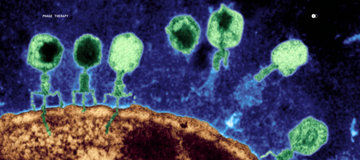
Phage therapy represents one of the most promising frontiers in this space. Bacteriophages are naturally occurring nano-microbes that target and destroy specific bacterial strains with high precision, leaving beneficial commensals untouched. Because they are strain-specific, phages can be matched to the exact organisms identified in a patient's microbiome profile. Phage-based interventions are already being used in antibiotic-resistant infection cases worldwide, and their potential in chronic inflammatory skin conditions like HS is an active area of scientific development.
Parallel also compounds custom prescription formulations, built directly from each patient's microbiome results. These can include targeted antimicrobials, anti-biofilm agents, and barrier-support actives calibrated to address the specific imbalances we document in your skin. It is a meaningfully different model from writing the same prescription for every patient with the same diagnosis.
More Than Symptom Management
HS is a chronic condition, and we won't promise a cure. However, we believe that precision, data-driven approaches, starting with an honest look at what is actually living on your skin, potentially offer a more sustainable path forward than long-term antibiotics and biologics.
Your microbiome is unique. Your treatment should be too.
Parallel Health is in-network with Aetna and Cigna in California. Email insurance@parallelhealth.io to check eligibility. To learn more about microbiome testing, chat with us online here at the lower right-hand corner of this page.
Frequently Asked Questions
Is HS caused by bacteria? Today, HS is considered an autoinflammatory disease driven by follicular occlusion and immune dysregulation. However, specific microbial communities, particularly anaerobic bacteria and biofilm-forming species, are consistently found in HS lesions and appear to amplify inflammation and drive recurrence. The microbiome is a significant factor.
Can microbiome testing help with HS? Yes. Shotgun metagenomic testing identifies which bacterial species are enriched in affected areas, assesses microbiome diversity, and detects organisms associated with biofilm formation. This data enables more targeted, personalized treatment decisions rather than rotating through standard protocols.
What is phage therapy and is it relevant to HS? Bacteriophages are naturally occurring nano-microbes that infect and eliminate specific bacterial strains while leaving surrounding beneficial bacteria unharmed. Because they are highly strain-specific, they can be matched to the pathogens identified in your individual microbiome profile. Parallel Health incorporates phage-based approaches as part of personalized treatment plans developed from microbiome testing.
Are there alternatives to long-term antibiotics for HS? Yes. Microbiome-informed care can include in-house compounded prescriptions, phage-based interventions, and barrier-support formulations, all designed around your specific microbial data rather than a one-size-fits-all protocol.
How do I get started with Parallel Health? Visit our MD-03 Hidradenitis Suppurativa Protocol™ page for more information. We are in-network with Aetna and Cigna in California.
Scientific References
-
Guet-Revillet H, et al. "Bacterial pathogens associated with hidradenitis suppurativa." Emerging Infectious Diseases. 2014;20(12):1990-1998.
-
Ring HC, et al. "The follicular skin microbiome in patients with hidradenitis suppurativa and healthy controls." JAMA Dermatology. 2017;153(9):897-905.
-
Nikolakis G, et al. "Bacteriology of hidradenitis suppurativa." Experimental Dermatology. 2019;28(Suppl 2):18-23.
-
Schneider AM, et al. "Skin microbiome in inflammatory skin diseases." Current Allergy and Asthma Reports. 2020;20(8):38.
-
Frew JW. "The pathogenesis of hidradenitis suppurativa." Dermatologic Clinics. 2016;34(1):47-60.
-
Kimball AB, et al. "Adalimumab for the treatment of moderate to severe hidradenitis suppurativa." New England Journal of Medicine. 2016;375(5):422-434.
-
Phothipan K, et al. "Microbiome dysbiosis in chronic inflammatory skin conditions and emerging therapeutic strategies." Journal of Investigative Dermatology. 2020;140(10):2090-2097.
-
Gordillo Altamirano F, Barr JJ. "Phage therapy in the postantibiotic era." Clinical Microbiology Reviews. 2019;32(2):e00066-18.