





Skin Barrier vs. Skin Microbiome: The Difference and Why it Matters
"Skin barrier repair" is one of the fastest-growing skincare search terms heading into 2026. "Skin microbiome" has quietly become one of the most cited concepts in clinical dermatology over the same period. The two terms are frequently used interchangeably in marketing copy, and they shouldn't be. They describe two distinct biological systems that depend on each other, and conflating them is a big part of why so many barrier-repair routines plateau.
Here, we draw a clean line between them, explain how they interact, and lay out what a clinically coherent approach to both actually looks like.
Quick definitions
The skin barrier is the physical and chemical wall formed by your stratum corneum, the outermost layer of the epidermis. It is built from cornified keratinocytes embedded in a lipid matrix of ceramides, cholesterol, and free fatty acids in roughly equimolar ratios. Its job is to prevent transepidermal water loss (TEWL) and block external irritants, allergens, and pathogens from getting in.
The skin microbiome is the living ecosystem on top of and within the barrier. It includes bacteria, fungi, viruses, and archaea. A healthy adult face and body carry hundreds, sometimes thousands of species across these domains. Its job is to outcompete pathogens, train the immune system, help regulate skin pH, and produce metabolites that the barrier itself depends on.
The barrier is the wall. The microbiome is what lives on the wall. They are different things.
How they interact
The barrier and the microbiome are not independent. They form a tightly coupled system, and modern research shows that the failure of one almost always involves the other.
The microbiome helps build the barrier. Commensal skin bacteria, like Staphylococcus epidermidis, secrete sphingomyelinase, an enzyme that liberates free ceramides on the skin surface. Beneficial microbes are not just sitting on your skin, they are actively contributing to the lipid matrix that defines the barrier.
The barrier shapes who lives there. Skin pH (around 4.5 to 5.5 in healthy skin), sebum composition, hydration, and available lipids determine which microbial species can colonize. A disrupted barrier creates a different microenvironment, typically higher pH, drier, and more inflamed, which selects for opportunistic species like Staphylococcus aureus or MRSA.
Dysbiosis amplifies barrier damage. When pathogenic species overgrow, they secrete proteases and toxins that degrade barrier proteins, further weakening the skin's structural integrity. This sets up a cycle: barrier damage enables dysbiosis, and dysbiosis worsens barrier damage. In atopic dermatitis, this loop is now considered central to disease pathogenesis.
Both signal to the immune system. The barrier is the first immunological boundary, and the microbiome is in continuous dialogue with cutaneous immune cells. Together they determine whether the skin sits in homeostasis or in a pro-inflammatory state. This is why both are implicated in conditions ranging from acne and rosacea to eczema and accelerated skin aging.
Why ceramide-only routines plateau
The dominant approach to barrier repair in conventional skincare is to topically supply the missing lipids (ceramides, cholesterol, and fatty acids), usually in fixed ratios. This works, up to a point. Clinical studies show that topical lipid supplementation can rebalance the stratum corneum ceramide profile and improve barrier function in adults predisposed to atopic dermatitis.
There's a ceiling, though. Topical ceramides replace what's missing without addressing why it went missing in the first place. If the underlying microbiome is dysbiotic, if S. aureus or other opportunists are still producing barrier-degrading proteases, or if the commensals that produce sphingomyelinase have been depleted, the routine becomes a treadmill. You keep applying ceramides, and the skin keeps losing them.
This is the gap consumers are describing when they say their routine "stopped working" or their skin "got worse" despite using barrier-repair products. The barrier is being patched. The ecosystem that should be maintaining it isn't being addressed.
What barrier and microbiome co-repair actually looks like
A clinically coherent approach treats the barrier and the microbiome as the coupled system they are. In practice, that involves several things working in parallel.
Restoring the lipid matrix still matters. Topical formulations that supply physiologic ratios of ceramides, cholesterol, and long-chain fatty acids remain essential. The evidence here is unambiguous and well established.
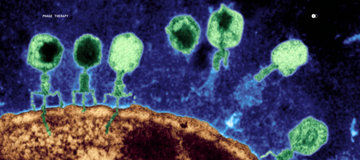
Rebalancing the ecosystem is where most skincare stops and where precision Microbiome Dermatology™ begins. Quantifying which species are over- or underrepresented on a given patient's skin (what we call Quantitative Microbial Analysis™) allows targeted intervention rather than the blunter alternatives of broad-spectrum antibiotics or generic prebiotics. Newer modalities, including precision phage therapy, can selectively reduce pathogenic strains while leaving commensals intact.
Removing the upstream drivers is the part most routines skip entirely. pH disruption, harsh surfactants, over-exfoliation, and chronic inflammation all destabilize both the barrier and the microbiome. Sustainable repair requires removing what's breaking the system, not just topically patching the damage.
This framework is what Parallel Health was built around. Our clinical protocol, MD-03 Protocol™, pairs barrier-supportive formulation with microbiome analysis and, where indicated, prescription-grade interventions delivered through our in-network telehealth platform.
So what does this mean for your routine?
The skin barrier and the skin microbiome are not the same thing. They are a coupled system, and the most common reason barrier-repair routines underperform is that the microbiome half of the equation is being ignored. Effective skin longevity requires attention to both.
If your routine is built entirely around topical ceramides and you're still seeing flares, sensitivity, or progression of fine lines and inflammation, the missing piece is probably underneath the wall, not on top of it.
FAQs
Is the skin barrier the same as the moisture barrier or acid mantle? Not exactly. The "moisture barrier" usually refers to the stratum corneum's lipid matrix and its role in preventing water loss. The "acid mantle" refers to the slightly acidic film on the skin surface (pH around 4.5 to 5.5) maintained partly by microbial metabolites like lactic acid. Both are components of the broader skin barrier system.
Can the skin microbiome repair itself, or do I need to intervene? A healthy microbiome is self-regulating. The question is whether you currently have one. If you're experiencing persistent inflammation, recurrent acne, sensitive skin, or post-antibiotic flares, your ecosystem is unlikely to recover on its own without targeted support. Skin microbiome profiling can identify whether intervention is warranted.
Do probiotic skincare products work? The category is uneven. Most over-the-counter "probiotic" products contain lysates (fragments of dead bacteria) rather than living organisms, and even when they do contain live cultures, the species are often not native to human skin. The more robust evidence base is around a holistic approach that includes precision microbiome modulation, meaning selectively reducing pathogenic strains and supporting native commensals, in addition to probiotic application.
Can over-cleansing damage the microbiome? Yes. Harsh surfactants and high-pH cleansers disrupt both the lipid barrier and the resident microbial community. Studies consistently show that aggressive cleansing routines shift the microbiome toward dysbiosis and increase TEWL within days.
Is the skin microbiome relevant to anti-aging or only to inflammatory skin conditions? Both. Microbiome composition shifts measurably with chronological age, and these shifts correlate with reduced barrier function, decreased ceramide production, and increased oxidative stress. All of these are hallmarks of skin aging. Supporting the microbiome is increasingly recognized as a skin longevity strategy, not just an inflammatory-disease strategy.
How do I know if my barrier or my microbiome is the problem? Clinically, the two are usually intertwined and need to be assessed together. Quantitative microbial profiling combined with barrier function measurements (TEWL, hydration, pH) gives the clearest picture. A telehealth Microbiome Dermatology™ consult is the most efficient entry point for that workup. If you'd rather start informally, you can message us via the chat widget at parallelhealth.io (lower right corner of any page).
Scientific references
-
Andrew PV, Williams SF, Brown K, et al. Topical supplementation with physiological lipids rebalances the stratum corneum ceramide profile and strengthens skin barrier function in adults predisposed to atopic dermatitis. British Journal of Dermatology. 2025;193(4):729–740. doi:10.1093/bjd/ljaf200
-
Eyerich S, Eyerich K, Traidl-Hoffmann C, Biedermann T. Cutaneous Barriers and Skin Immunity: Differentiating a Connected Network. Trends in Immunology. 2018;39(4):315–327.
-
Traidl S, Roesner L, Werfel T. Exploring the skin microbiome in atopic dermatitis pathogenesis and disease modification. Journal of Allergy and Clinical Immunology. 2024;154(1):31–41.
-
Burger E, Gallo RL. Host-microbiome interactions in the holobiome of atopic dermatitis. Journal of Allergy and Clinical Immunology. 2023;151(5):1236–1238.
-
Bhattacharya N, et al. Microbiome dysbiosis and therapeutic restoration in atopic dermatitis. Frontiers in Cellular and Infection Microbiology. 2026;16:1693905.
-
Khmaladze I, Butler É, Fabre S, Gillbro JM. Microbiome-Based Interventions for Skin Aging and Barrier Function: A Comprehensive Review. 2024. PMC12505367.
-
Roux PF, et al. Alteration of barrier properties, stratum corneum ceramides and microbiome composition in response to lotion application on cosmetic dry skin. Scientific Reports. 2022;12:5159. doi:10.1038/s41598-022-09231-8
-
Berdyshev E, Goleva E, Bronova I, et al. Stratum corneum lipidomics analysis reveals altered ceramide profile in atopic dermatitis patients across body sites with correlated changes in skin microbiome. Allergy. 2021;76(9):2774–2787.
-
de Almeida CV, Antiga E, Lulli M. Skin Lipids and Their Influence on Skin Microbiome and Skin Care. ACS Omega. 2025. doi:10.1021/acsomega.4c11687
-
Nakatsuji T, Chen TH, Narala S, et al. Antimicrobials from human skin commensal bacteria protect against Staphylococcus aureus and are deficient in atopic dermatitis. Science Translational Medicine. 2017;9(378):eaah4680.
-
Williams MR, Gallo RL. The role of the skin microbiome in atopic dermatitis. Current Allergy and Asthma Reports. 2015;15(11):65.
-
Lambers H, Piessens S, Bloem A, Pronk H, Finkel P. Natural skin surface pH is on average below 5, which is beneficial for its resident flora. International Journal of Cosmetic Science. 2006;28(5):359–370.
-
Edslev SM, Agner T, Andersen PS. Skin Microbiome in Atopic Dermatitis. Acta Dermato-Venereologica. 2020;100:adv00164.
-
Boxberger M, Cenizo V, Cassir N, La Scola B. Challenges in exploring and manipulating the human skin microbiome. Microbiome. 2021;9:125.
-
Belkaid Y, Segre JA. Dialogue between skin microbiota and immunity. Science. 2014;346(6212):954–959.
This article is for educational purposes and is not a substitute for individualized medical advice. Curious whether the MD-03 Protocol™ is the right fit for your skin? Message our team at parallelhealth.io (chat in lower right corner). Parallel Health is in-network with Aetna, Cigna, and UnitedHealthcare in California.