





Age Better. Improve Your Good Bacteria.
Your skin is home to trillions of bacteria, viruses, fungi, archaea, and other microbes that form a living ecosystem called the skin microbiome. When that ecosystem is diverse and balanced, your skin looks good — resilient, hydrated, luminous, and slow to age. When it isn't, the consequences show up as redness, dryness, persistent breakouts, accelerated aging, and sensitivity that seems to come from nowhere.
Skin microbiome health isn't just a wellness trend. It's increasingly understood as a foundational pillar of skin longevity.
What Does a Healthy Skin Microbiome Actually Do?
A diverse skin microbiome is your first line of defense. Beneficial bacteria — including species like Lactobacillus — compete with harmful microbes for space and nutrients, producing antimicrobial compounds that keep pathogens in check. They help regulate your skin's pH, maintain the moisture barrier, calibrate the local immune response, and produce metabolites that directly support collagen stability and cellular renewal.
Diversity is the operative word. A microbiome dominated by a single species — even a nominally beneficial one — is structurally fragile. Ecological redundancy, where multiple microbial species perform overlapping protective functions, is what gives your skin its buffering capacity against stress, pollution, diet changes, hormonal fluctuations, and seasonal shifts. High microbial diversity correlates with lower rates of inflammatory skin disease and measurably better skin aging outcomes. Low diversity does not.
What Happens When Skin Microbiome Diversity Is Low?
Low microbial diversity — called dysbiosis — is associated with a spectrum of conditions dermatologists see daily. In eczema and atopic dermatitis, Staphylococcus aureus frequently dominates at the expense of protective commensals, driving barrier dysfunction and chronic inflammation. In acne, overgrowth of specific Cutibacterium acnes strains tips an otherwise commensal organism into a driver of breakouts. In rosacea and seborrheic dermatitis, disrupted microbiome ecology amplifies inflammatory signaling through the skin's innate immune pathways.
Dysbiosis also accelerates aging in ways that go deeper than aesthetics. When the microbial community is imbalanced, the stratum corneum becomes more permeable, transepidermal water loss increases, and the skin's capacity to neutralize oxidative stress diminishes. This is a measurable failure of barrier biology. Collagen degradation outpaces synthesis. Elastin fibers become disorganized. Fine lines deepen, skin tone becomes uneven, and the skin's natural renewal cycle slows. The skin looks older because, at a microbial and cellular level, it is aging faster than it should.
Triggers for dysbiosis are widespread and often invisible: over-cleansing with harsh surfactants, imprecise topical antibiotic use, environmental pollutants, high-glycemic diets, sleep deprivation, and cortisol spikes that alter sebum composition and shift microbial community structure. Most people are actively destabilizing their microbiome while trying to care for their skin.
The Skin Microbiome and Longevity: A Deeper Connection
Emerging research is reframing the skin microbiome not just as a barrier mechanism, but as an active participant in the biology of skin aging. The relationship runs in both directions: a dysbiotic microbiome accelerates aging, and an aging skin environment — characterized by reduced sebum production, altered pH, and declining immune surveillance — makes the microbiome increasingly difficult to maintain.
Microbial metabolites produced by commensal bacteria directly influence keratinocyte proliferation, collagen gene expression, and the activity of matrix metalloproteinases (MMPs), the enzymes responsible for breaking down structural proteins. Short-chain fatty acids produced by skin commensals help maintain an acidic pH that is hostile to pathogens and favorable to barrier function. When that production declines, the cascade of structural damage begins well below the surface.
This means that protecting skin longevity requires protecting the microbiome — continuously, not reactively. The most effective anti-aging strategy is also a microbiome strategy.
How Do You Support Skin Microbiome Diversity and Barrier Health?
Supporting the skin microbiome means feeding, protecting, and replenishing the microbial community — not just cleansing it. Prebiotics provide the nutritional substrate beneficial bacteria need to thrive. Probiotics introduce live beneficial organisms that compete with dysbiotic strains. Postbiotics deliver the fermentation-derived metabolites that microbial communities naturally produce, offering nourishment and immune signaling even independent of live colonization.
Barrier repair is equally non-negotiable. Ceramides — lipid-identical to those naturally found in the stratum corneum — restore the structural integrity that keeps moisture in and environmental aggressors out. A compromised barrier is a dysbiotic environment. The two problems compound each other, and addressing only one produces incomplete results.
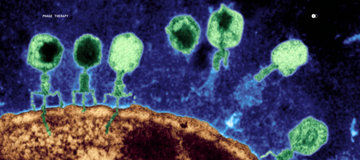
For those with more complex or persistent microbiome imbalances, biotics alone may not be sufficient. This is where precision phages enter the picture. Bacteriophages — nano-microbes that naturally occur on healthy skin — target specific harmful bacteria with a precision that no antibiotic or broad-spectrum ingredient can match. Rather than disrupting the entire microbial community, precision phages selectively reduce the bacterial strains driving inflammation, breakouts, or barrier dysfunction, creating space for beneficial commensals to reestablish balance. At Parallel Health, we combine phage therapy with biotics as a complete microbiome strategy: phages reduce what shouldn't be there, while biotics rebuild and sustain what should.
True skin longevity requires all of it working in concert — a supported microbiome, a structurally sound barrier, and when needed, the precision to address imbalance at the strain level.
Bulletproof your barrier with biotics.
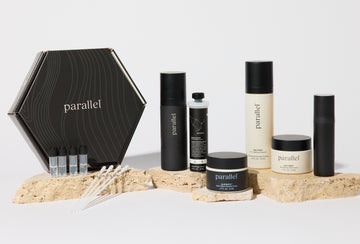
The Skin Barrier Biotic™ Cream was formulated at the intersection of microbiome science and barrier biology — for skin that doesn't just look good today, but is built to age well.
It delivers a full prebiotic-probiotic-postbiotic complex alongside a triple ceramide complex (NP, AP, EOP), Palmitoyl Tripeptide-38 for collagen support, Niacinamide for barrier strengthening and tone, Phytosphingosine as a ceramide building block, Squalane for lipid barrier fortification, Leuconostoc/Radish Root Ferment Filtrate (postbiotic), and Rosehip Oil for antioxidant protection and regeneration.
In user testing: 100% of participants reported skin feeling stronger and more protected. 97% experienced increased hydration and suppleness. 95% noticed calmer skin immediately after application. 92% experienced firmer, more lifted, and more youthful skin.
Formulated in-house by the team behind Microbiome Dermatology™. HSA/FSA eligible.
Shop the Skin Barrier Biotic™ Cream →
Frequently Asked Questions
What is the skin microbiome? The skin microbiome is the community of bacteria, fungi, viruses, and nano-microbes that live on and within the layers of your skin. A diverse, balanced microbiome supports barrier function, immune regulation, hydration, and protection against pathogenic organisms.
What causes low skin microbiome diversity? Common causes include over-cleansing with stripping surfactants, broad-spectrum topical or oral antibiotics, environmental pollution, high-glycemic diets, chronic stress, hormonal changes, and the natural shifts in sebum production and skin pH that occur with age.
How does a disrupted skin microbiome affect aging? Dysbiosis impairs the skin's ability to regulate collagen synthesis, maintain barrier integrity, and neutralize oxidative stress. This accelerates the structural breakdown associated with aging — including fine lines, uneven tone, loss of firmness, and increased sensitivity. Research increasingly supports the view that skin microbiome health and skin longevity are directly linked.
Can topical products actually support the skin microbiome? Yes. Topical prebiotics, probiotics, and postbiotics have demonstrated efficacy in modulating the skin microbiome environment, supporting commensal bacterial populations, and improving barrier function. The key is formulation quality and the right combination of biotic types working together. For deeper or more persistent imbalances, precision phages can be layered on top of a biotic foundation — targeting the specific bacterial strains driving dysfunction while biotics simultaneously rebuild the healthy community around them.
What are precision phages and how do they support skin health? Bacteriophages are nano-microbes that occur naturally on healthy skin and have co-evolved alongside the human microbiome for millions of years. Precision phages are selected for their ability to target specific harmful bacteria — the strains linked to acne, inflammation, barrier breakdown, and accelerated skin aging — without disturbing the beneficial microbial community around them. This makes them fundamentally different from antibiotics or broad-spectrum actives, which reduce microbial diversity indiscriminately. At Parallel Health, precision phages are paired with biotics as a two-layer microbiome strategy: phages reduce what shouldn't be there, biotics restore and sustain what should. The result is a more targeted, more durable path to microbiome balance than either approach achieves alone.
What is the difference between prebiotics, probiotics, and postbiotics for skin? Prebiotics are substrates that feed beneficial bacteria already on the skin. Probiotics are live microorganisms that add to or support the existing community. Postbiotics are bioactive compounds — metabolites and cell fragments — produced by microbial fermentation that deliver functional benefits independently of live organisms. Together, they address microbiome health from multiple angles.
Who should use a microbiome-supportive moisturizer? Anyone experiencing dryness, sensitivity, redness, uneven texture, breakouts, or signs of premature aging may benefit — as these are frequently downstream symptoms of microbiome imbalance and barrier compromise. It is also appropriate as a preventive measure for maintaining skin longevity over time.
Is there a targeted option for skin aging specifically? For those focused on skin longevity and advanced aging support, the Blue Biotic™ Multi-Effect Peptide Cream is Parallel Health's most concentrated anti-aging formulation. It combines a prebiotic and postbiotic complex to support microbiome balance with a high-potency peptide stack — including GHK-Cu, SNAP-8, Palmitoyl Tripeptide-1, Palmitoyl Tetrapeptide-7, and Palmitoyl Tripeptide-38 — that works at the level of collagen synthesis, muscle relaxation, and deep structural repair. Where the Skin Barrier Biotic™ Cream builds and defends the foundation, the Blue Biotic™ targets the visible signs of aging with clinical-grade precision.
For patients who need more, Parallel Health's board-certified dermatologists can prescribe custom compounded retinoids — including tretinoin or tazarotene at doses calibrated specifically for your skin — formulated in-house and delivered to your door. These aren't off-the-shelf concentrations. They are precision prescriptions built around your skin's individual biology, designed to work alongside your biotic regimen without compromising barrier integrity. The Skin Barrier Biotic™ Cream, the Blue Biotic™, and a custom compounded Rx together form Parallel's most complete skin longevity protocol.
Scientific References
- Byrd, A.L., Belkaid, Y., & Segre, J.A. (2018). The human skin microbiome. Nature Reviews Microbiology, 16(3), 143–155. https://doi.org/10.1038/nrmicro.2017.157
- Belkaid, Y., & Hand, T.W. (2014). Role of the microbiota in immunity and inflammation. Cell, 157(1), 121–141. https://doi.org/10.1016/j.cell.2014.03.011
- Grice, E.A., & Segre, J.A. (2011). The skin microbiome. Nature Reviews Microbiology, 9(4), 244–253. https://doi.org/10.1038/nrmicro2537
- Kong, H.H., et al. (2012). Temporal shifts in the skin microbiome of atopic dermatitis patients. Genome Research, 22(5), 850–859. https://doi.org/10.1101/gr.131029.111
- Huang, Y.J., & Marsland, B.J. (2018). The microbiome in skin inflammatory diseases. Journal of Allergy and Clinical Immunology, 141(6), 1985–1991.
- Chen, Y.E., Fischbach, M.A., & Belkaid, Y. (2018). Skin microbiota-host interactions. Nature, 553(7689), 427–436. https://doi.org/10.1038/nature25177
- Dréno, B., et al. (2016). Microbiome in healthy skin, understanding alterations in skin disorders and possible therapeutic approaches with skin care products. Journal of the European Academy of Dermatology and Venereology, 30(12), 2038–2047. https://doi.org/10.1111/jdv.13965
- Sfriso, R., et al. (2020). Skin microbiome imbalance and its impact on aging. Experimental Dermatology, 29(9), 826–834. https://doi.org/10.1111/exd.14153
- anti-aging skin microbiome ,
- biotics for skin ,
- microbiome dermatology ,
- microbiome dysbiosis skin ,
- phage therapy for skin ,
- postbiotics ,
- prebiotics ,
- probiotics ,
- probiotics for skin ,
- Skin barrier biotic ,
- skin barrier repair ,
- skin longevity ,
- skin microbiome ,
- skin microbiome health ,
- skin microbiome skincare