





Phage Therapy for Skin Health and Longevity: A Physician-Supervised Path
by Parallel Health Team
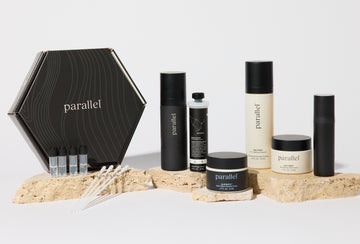
Many people first encounter the term "phage therapy" through an online thread on Reddit or a recommendation from a friend, and arrive with a reasonable question: is this genuinely available in the United States, under proper medical oversight? It is. Parallel Health offers Microbiome Dermatology™ through a dedicated telehealth practice, where board-certified dermatologists and PhD microbiologists interpret your skin microbiome results together and provide personalized solutions. Patients who qualify based on those results may be offered a custom phage formulation as part of this proprietary approach. This article outlines what phage therapy is, why it matters for skin health, and how to determine whether you qualify.
What Is Phage Therapy?
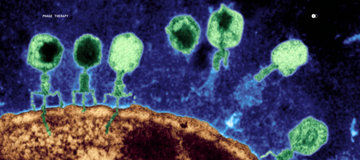
Bacteriophages are nanomicrobes that occur naturally in the environment and target bacteria with a high degree of specificity. Each one has evolved to recognize a narrow range of bacterial targets, which is what makes the category compelling for skin science: rather than broadly disrupting an entire microbial community, a well-matched phage can be selective about which bacterial populations it engages with.
The modern foundation of clinical phage science is widely credited to the Eliava Institute in Tbilisi, Georgia, where phage-based approaches have been studied and applied clinically since the early twentieth century. That century of research remains a reference point for serious phage science globally. What has changed more recently is that the practice has matured into an offering in the United States, for patients and customers, built on modern genomic sequencing and delivered under physician and microbiologist oversight, so patients no longer need to look abroad to explore it.
Why the Skin Microbiome Matters
Skin is not sterile. It hosts a dense, individualized ecosystem of bacteria, fungi, and phages that shapes how skin looks, feels, and responds to products. When that ecosystem is imbalanced, with certain bacterial populations overrepresented relative to others, the effects are often visible as persistent redness, breakouts, texture irregularities, odor, or skin that no longer responds predictably to a well-established routine.
Conventional skincare is formulated to address symptoms rather than the underlying microbial composition that may be driving them. Understanding that composition, precisely, at the level of individual strains, is the premise on which Microbiome Dermatology™ is built.
A Collaborative Model: Microbiology and Dermatology, Working Together
Parallel Health was founded on a simple observation: dermatology and microbiology have historically operated as separate disciplines, even though skin conditions are frequently shaped by microbial dynamics that only a trained microbiologist can fully interpret. Our model brings the two together. Board-certified dermatologists and PhD-level microbiologists review cases jointly, particularly the more complex ones, so that clinical judgment and genomic data inform each other rather than sitting in separate silos. This collaborative structure is, in our view, what makes precision, microbiome-informed dermatology possible in the first place.
How the Process Works
Parallel Health is a precision health company built around whole-genome shotgun metagenomic sequencing, a substantially higher-resolution method than the 16S sequencing used by most consumer microbiome kits. The process unfolds in four stages:
- Test. Skin microbiome swab(s), collected at home, are sequenced using whole-genome shotgun metagenomics.
- Analyze. Results are mapped against a proprietary reference database of more than 10,000 characterized microbial strains, the majority previously undocumented, to identify which bacterial populations are over- or under-represented at each site tested.
- Formulate. Our microbiology and dermatology teams jointly determine whether you qualify for a custom phage formulation based on your results, and if so, what that formulation strategy should be. Formulations are manufactured and compounded in-house.
- Reassess. Because the skin microbiome shifts over time, formulations can be revisited and adjusted as new data becomes available with continued testing.
Separately, for patients whose case warrants a more clinical approach, our affiliated telehealth dermatology practice can evaluate microbiome results and, when appropriate, prescribe a custom compounded prescription, a distinct, physician-directed pathway.
Regulatory Standing
Parallel Health is LegitScript-certified, and our telehealth practice is staffed by board-certified dermatologists working alongside our microbiology team on clinical review. We are also in-network with Blue Shield of California, UHC, Cigna, and Aetna in California, a credentialing status that reflects meeting established payer standards.
Why This May Be New to You
Search results for "phage therapy for skin" tend to surface academic literature and international clinics rather than domestic, physician-supervised options, largely because the category is still young in the United States.
Who Typically Pursues This
Patients typically pursue skin microbiome testing after conventional routines have not produced the results they expected: persistent breakouts, stress-linked redness, scalp or body odor concerns, or skin that reacts unpredictably to standard products. Testing does not, by itself, constitute a medical diagnosis; it characterizes the bacterial ecosystem present, which our clinical and scientific teams then use to determine formulation eligibility and, where indicated, further evaluation.
A distinct and growing group of patients come to the MD-03 Protocol™ from the aging and longevity space. Among the body's various microbiomes, the skin microbiome has emerged as a particularly strong predictor of biological aging, which makes it a natural focus for patients who already track other longevity biomarkers and are looking for a rigorous, data-driven way to understand skin aging specifically.
Getting Started
- Order skin microbiome testing for the area or areas you would like mapped.
- Receive results, interpreted against our proprietary strain database.
- If you qualify based on your results, receive a custom phage serum and, if clinically appropriate, a compounded prescription option through our telehealth platform.
- Reassess periodically as your skin's microbial composition evolves.
FAQ: Phage Therapy for Skin
Is phage therapy for skin available in the United States? Yes. Parallel Health formulates and ships custom phage-based skin serums domestically, under the oversight of our dermatology and microbiology teams. International travel is not required to access this category of skin support.
Is this a drug or a treatment? Parallel Health's phage serums are sold as cosmeceuticals, not as drugs, and are not marketed to treat a disease. Separately, our affiliated telehealth dermatology practice can issue a custom compounded prescription based on your microbiome results when a clinician determines it is appropriate. That pathway is distinct and physician-directed.
How much does skin microbiome testing cost? Our off-the-shelf, a la carte skin microbiome testing runs $295 to $495+, depending on the site(s) tested. Custom multi-area kits start in the same range and scale with the number of areas you want sequenced.
How much do the phage serums cost? Custom phage serums are $195/month per area and can only be accessed through the MD-03 Protocol™ after skin microbiome testing.
What is the MD-03 Protocol™ and what does it cost? The MD-03 Protocol™ is our structured, ongoing microbiome-informed skin program. It starts at $195/month. If you're insured through Aetna, Cigna, UHC, or Blue Shield of California, your cost may be lower through our in-network arrangements in California. We're actively expanding insurance partnerships beyond these carriers, so coverage options will continue to grow.
Does insurance cover this? Coverage currently applies to specific in-network arrangements in California with Aetna, Cigna, UHC, and Blue Shield of California. If you're not covered by one of these plans, you can still access testing and formulations at the a la carte and MD-03 Protocol pricing above.
Is pricing negotiable or does it vary by "package"? Pricing is based on how many areas you test and whether you're accessing a la carte testing, ongoing serums, or the full MD-03 Protocol.
How is this different from a probiotic skincare product off the shelf? Shelf-stable probiotic or "microbiome-friendly" skincare is formulated the same way for everyone. Parallel Health sequences your individual skin microbiome first and builds a formulation specific to what's actually present on your skin at the time of testing.
Scientific References
- Byrd AL, Belkaid Y, Segre JA. The human skin microbiome. Nat Rev Microbiol. 2018;16(3):143-155. doi:10.1038/nrmicro.2017.157
- Golembo M, Puttagunta S, Rappo U, et al. Development of a topical bacteriophage gel targeting Cutibacterium acnes for acne prone skin and results of a phase 1 cosmetic randomized clinical trial. Skin Health Dis. 2022;2(2):e93. doi:10.1002/ski2.93
- Hauza E, Mutai IJ, Necel A, Kamya D, Śliwka P, Dusza I, Węgrzyn A, Skaradzińska A. Bacteriophages in the treatment of cutaneous infections and skin disorders: therapeutic advances and future directions. Clin Microbiol Rev. 2026. doi:10.1128/cmr.00048-26
- Natarelli N, Gahoonia N, Sivamani RK. Bacteriophages and the microbiome in dermatology: the role of the phageome and a potential therapeutic strategy. Int J Mol Sci. 2023;24(3):2695. doi:10.3390/ijms24032695
- Ito Y, Amagai M. Controlling skin microbiome as a new bacteriotherapy for inflammatory skin diseases. Inflamm Regen. 2022;42:26. doi:10.1186/s41232-022-00212-y
- Mu A, McDonald D, Jarmusch AK, et al. Assessment of the microbiome during bacteriophage therapy in combination with systemic antibiotics to treat a case of staphylococcal device infection. Microbiome. 2021;9:92. doi:10.1186/s40168-021-01026-9
- bacteriophage skin serum ,
- custom phage formulation ,
- MD-03 Protocol™ ,
- microbiome dermatology ,
- phage therapy ,
- phage therapy acne ,
- phage therapy for body odor ,
- phage therapy for skin ,
- phage therapy in the US ,
- skin longevity biomarkers ,
- skin microbiome aging ,
- skin microbiome testing ,
- skincare on reddit ,
- telehealth dermatology microbiome