





Is Botox Aging You? What a New Study Reveals About Stem Cells and Skin Longevity
Botox works. This isn't controversial—decades of clinical use have demonstrated its efficacy in reducing dynamic wrinkles and fine lines. Millions of people receive treatments annually with satisfactory results and minimal complications. But a 2021 study published in Stem Cell Research & Therapy raises questions not about whether Botox delivers its promised cosmetic outcomes, but about what else might be happening at the cellular level while it does so.
The research, conducted on mouse models, found that intramuscular Botox injections led to tendon atrophy—not through direct mechanical effects, but by inducing senescence in tendon-derived stem cells (TDSCs). Senescence is the biological process by which cells lose their ability to divide and function, essentially entering a state of accelerated aging. These findings suggest that Botox's effects may extend beyond temporary muscle paralysis to influence the regenerative capacity of surrounding tissues.
The Distinction That Matters
Looking younger and maintaining long-term skin health are related objectives, but they're not identical. Botox excels at the former—smoothing wrinkles by preventing muscle contractions that create dynamic lines. But skin longevity involves preserving the underlying architecture: stem cell populations, extracellular matrix integrity, vascular networks, and the complex ecosystem of cells that maintain tissue resilience over decades.
The stem cell finding is particularly relevant to this distinction. Stem cells are our tissue renewal systems—they repair damage, maintain structure, and preserve function as we age. If repeated Botox treatments affect stem cell populations in ways we're only beginning to understand, we need to ask: what are the long-term implications for tissue health beyond wrinkle reduction?
Migration and Systemic Effects
Equally important is the question of toxin migration. While cosmetic Botox doses are measured in trillionths of a gram and are considered locally acting, research from the University of Wisconsin-Madison demonstrated that botulinum toxin molecules can travel along neural pathways to distant sites. The biological significance of this migration—particularly with repeated treatments over years—remains incompletely characterized.
This doesn't mean Botox is unsafe. It means the long-term effects of cumulative exposure deserve more investigation than they've received.
Working With Biology, Not Against It
The emerging paradigm in dermatology recognizes that skin isn't merely a surface to be smoothed—it's a living ecosystem. Approaches that support this ecosystem—through advanced peptides that stimulate natural collagen production, or microbiome-modulating ingredients that maintain the skin's protective bacterial communities—offer a different calculus. These interventions aim to address volume loss and wrinkle formation by supporting the skin's own regenerative processes rather than inhibiting muscle function.
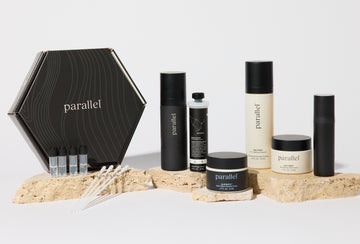
At Parallel Health, our Custom Active Phage Serums, Blue Biotic™, and Skin Barrier Biotic™ formulations exemplify this approach. By combining clinically studied peptides with phages, prebiotics, probiotics, and postbiotics, these treatments work to enhance collagen synthesis and skin barrier function while maintaining the delicate microbial balance that influences inflammation, aging, and overall skin health. They can be used alongside Botox for complementary benefits, or as standalone interventions for those prioritizing cellular-level skin longevity.
Individual Variation and Informed Decisions
Perhaps most importantly: everyone's biology is different. Some individuals may experience minimal long-term effects from regular Botox treatments. Others may be more susceptible to muscle atrophy, changes in facial architecture, or impacts on tissue regeneration. We simply don't have the longitudinal data to predict who falls into which category...yet.
This isn't a call to abandon Botox. It's an invitation to approach aesthetic interventions with the same rigor we apply to other aspects of health: understanding mechanisms, acknowledging unknowns, and making decisions based on individual risk-benefit calculations rather than one-size-fits-all protocols.
The future of aesthetic medicine likely lies not in choosing between intervention and aging gracefully, but in developing approaches that deliver visible results while supporting—rather than potentially compromising—the cellular systems that maintain long-term tissue health. That distinction matters more as we recognize that how we look and how our tissues age are parallel conversations worth having simultaneously.
Frequently Asked Questions
What did the 2021 study actually find?
The study, published in Stem Cell Research & Therapy, found that intramuscular Botox injections in mice caused tendon atrophy by inducing senescence (cellular aging) in tendon-derived stem cells. The research demonstrated that mechanical stress deprivation following Botox injection affected the regenerative capacity of stem cell populations in surrounding tissues, not just the injected muscle itself.[1]
Does this mean Botox causes permanent aging?
Not necessarily. The study was conducted in mice with specific dosages and timeframes. The effects observed were cellular-level changes in stem cell function, which may or may not translate to clinically significant long-term outcomes in humans receiving cosmetic doses. More longitudinal human studies are needed.
Should I stop getting Botox?
This research doesn't provide a clear "yes" or "no" answer. Botox remains effective for wrinkle reduction with a well-established safety profile for short-to-medium-term use. The question is about long-term cumulative effects on tissue regeneration—which we don't yet fully understand. The decision should be individualized based on your priorities, frequency of treatment, and tolerance for unknowns.
What is the difference between "looking younger" and "skin longevity"?
Looking younger typically refers to visible improvements in wrinkles, texture, and tone—outcomes achievable through various cosmetic interventions. Skin longevity refers to maintaining the underlying cellular and structural health of skin tissue over time: preserving stem cell populations, collagen architecture, vascular networks, and regenerative capacity. They're related but distinct objectives that may require different approaches.
What is toxin migration and should I be concerned?
Research has shown that botulinum toxin molecules can travel along neural pathways beyond the injection site. While cosmetic doses are extremely small and adverse systemic effects are rare, the long-term implications of repeated toxin migration over years of regular treatments remain incompletely understood. Proper injection technique by experienced practitioners minimizes this risk.
How often is "too often" for Botox treatments?
There's no definitive answer. Standard cosmetic protocols typically recommend treatments every 3-4 months. Some practitioners advocate for "preventative Botox" in younger patients with less frequent dosing. The 2021 study and related research suggest that giving tissues adequate recovery time between treatments may be important for cellular health, but optimal intervals haven't been established through long-term human studies. Many patients in the Parallel community use the Blue Biotic™ as a way to extend the effects of Botox and, therefore, increase time between Botox appointments.
Can I use Parallel Health's products alongside Botox?
Yes. Custom Active Phage Serums, The Blue Biotic™, and Skin Barrier Biotic™ formulations work through complementary mechanisms—they support collagen production, address volume loss, and improve skin barrier function through peptides and microbiome modulation rather than muscle paralysis. Many people use these products alongside Botox to address both dynamic wrinkles (through neurotoxin) and underlying tissue health (through regenerative ingredients). This combined approach may help maintain skin architecture while achieving visible wrinkle reduction.
What makes peptide and microbiome approaches different from Botox?
Botox works by blocking nerve signals to prevent muscle contraction, reducing dynamic wrinkles but potentially affecting stem cell function and tissue regeneration. Peptide-based approaches stimulate your skin's own collagen production pathways, while prebiotics, probiotics, and postbiotics support the skin microbiome's role in barrier function and inflammation control. These ingredients work with your skin's biology rather than inhibiting it. The trade-off is that results develop more gradually and may be less dramatic for deep dynamic wrinkles, though they address static wrinkles, volume loss, and overall skin quality.
If I'm concerned about the stem cell findings, what are my options?
You have several approaches depending on your priorities:
- Continue Botox with longer intervals between treatments to allow tissue recovery
- Combine Botox with regenerative treatments like the Blue Biotic™ (which contains peptides that support wrinkle reduction, collagen synthesis, and skin barrier function) to address both dynamic wrinkles and underlying tissue health
- Transition to peptide-based approaches as a primary strategy, accepting that results may be more subtle but potentially better for long-term cellular health
- Use microbiome-supporting formulations like Skin Barrier Biotic™ that work to reduce inflammation and support the skin's natural repair processes
The right choice depends on your individual skin concerns, risk tolerance, and whether you prioritize immediate wrinkle reduction or long-term tissue preservation—or both.
Do prebiotics and probiotics actually work for skin aging?
Emerging research demonstrates that the skin microbiome significantly influences inflammation, barrier function, and the visible signs of aging. Prebiotics feed beneficial skin bacteria, probiotics introduce live beneficial organisms, and postbiotics are the metabolites these organisms produce—all of which can modulate skin health. While the research is newer than that for Botox, clinical studies show improvements in skin hydration, barrier function, and inflammation markers with microbiome-targeted treatments. The approach addresses aging through a different mechanism: supporting the ecosystem that maintains skin resilience rather than paralyzing muscles.
References
[1] Cheung EV, et al. Intramuscular injection of Botox causes tendon atrophy by induction of senescence of tendon-derived stem cells. Stem Cell Research & Therapy. 2021;12:38.
[2] Fortuna R, et al. Changes in contractile properties of muscles receiving repeat injections of botulinum toxin (Botox). Journal of Biomechanics. 2011;44(1):39-44.
[3] Vevea JD, et al. Role of the cleavage-resistant VAMP2 isoform in botulinum neurotoxin evasion. Cell Reports. 2016;16(7):1914-1923.
[4] Warner SE, et al. Botox induced muscle paralysis rapidly degrades bone. Bone. 2006;38(2):257-264.
Note: While the 2021 stem cell senescence study was conducted in animal models, these findings contribute to a growing body of literature examining cellular-level effects of repeated botulinum toxin exposure that warrant further investigation in human populations.