





Hair Loss and Hair Thinning 101: Types, Causes, and the Surprising Role of Your Scalp Microbiome
Hair loss affects millions of people worldwide, yet its root causes are frequently misunderstood. While genetics and hormones get most of the attention, emerging science points to another major player: the scalp microbiome. Here's what you need to know about the most common forms of hair loss and how microbial imbalances may be driving your thinning hair.
The Most Common Types of Hair Loss
Androgenetic Alopecia (AGA), also called male- or female-pattern hair loss, is the most prevalent form, affecting roughly 50% of men and 40% of women over a lifetime. It's driven by genetic sensitivity to dihydrotestosterone (DHT), which miniaturizes hair follicles over time.
Alopecia Areata (AA) is an autoimmune condition in which the immune system mistakenly attacks hair follicles, producing patchy, non-scarring hair loss. It affects approximately 2% of the global population and can progress to total scalp loss (alopecia totalis) or full-body hair loss (alopecia universalis).
Telogen Effluvium is a diffuse, temporary shedding triggered by physiological stressors: surgery, illness, postpartum hormonal shifts, or nutritional deficiencies. Hair follicles shift prematurely into the resting (telogen) phase and shed en masse, typically 2–3 months after the triggering event.
Traction Alopecia results from chronic mechanical tension on the hair shaft from tight hairstyles. It often begins at the hairline and, if caught early, is reversible.
Senescent Alopecia is age-related hair thinning that occurs independently of hormonal pattern loss. As we age, the follicle's active growth (anagen) phase shortens, stem cell activity in the follicle bulge declines, and hair grows in progressively finer and sparser. Unlike AGA, it affects the scalp diffusely rather than in a defined pattern, and it's driven by the cumulative effects of cellular aging rather than DHT sensitivity. It frequently overlaps with AGA in older adults, making the two difficult to distinguish without clinical evaluation.
Scarring Alopecias (including lichen planopilaris and central centrifugal cicatricial alopecia) involve permanent destruction of the follicle through inflammation, leaving scar tissue in its place. Early diagnosis is critical to halt progression.
Your Scalp Microbiome and Hair Health
The scalp harbors a rich community of bacteria, fungi, and other microorganisms (approximately 10² to 10⁷ bacteria per cm²). In a balanced state, this ecosystem actively supports immune regulation, skin barrier function, and follicle health. When this balance is disrupted, a state called dysbiosis, the consequences for your hair can be significant.
Research has identified distinct microbial shifts across multiple forms of alopecia. A pivotal study found that scalp microbiomes of patients with androgenetic alopecia showed severe imbalances that extended beyond areas of visible hair loss, affecting the entire scalp, and the degree of dysbiosis tracked with disease severity. Researchers even developed a machine-learning-based "microbial index of scalp health" (MiSCH) capable of identifying high-risk individuals before visible hair loss appeared.
Aging adds another layer of complexity. Older scalps naturally undergo hyper-diversification of their microbial communities, a shift that correlates with dysbiosis rather than improved health. This means age-related thinning and microbiome imbalance can compound each other: a disrupted scalp ecosystem amplifies the follicular stress that cellular aging already imposes, potentially accelerating senescent alopecia in ways that a standard clinical exam alone won't capture.
A Special Look at Alopecia Areata and the Microbiome Connection
The link between scalp dysbiosis and alopecia areata is among the most compelling in the field. A 2024 cross-sectional study published in Dermatology and Therapy found significant dysbiosis in the scalp microbiota of AA patients compared to healthy controls, with microbial imbalances correlating with both disease severity and circulating inflammatory markers.
At the species level, AA scalps show a notable increase in Propionibacterium acnes and a corresponding decrease in commensal Staphylococcus epidermidis, a keystone organism known for its anti-inflammatory and barrier-protective properties. Separately, higher proportions of Corynebacterium species and reduced microbial diversity have also been reported in AA patients.
The gut-scalp axis adds another dimension. Fecal microbiota transplantation (FMT) studies have documented unexpected hair regrowth in AA patients who received gut flora transplants for unrelated gastrointestinal conditions, suggesting that systemic microbiome restoration can influence follicular immune tolerance. A 2024 Mendelian randomization analysis further identified 16 specific gut bacterial taxa with likely causal associations with alopecia areata incidence.
The proposed mechanism: dysbiosis (whether cutaneous or intestinal) triggers inflammatory cascades involving interleukins, tumor necrosis factor-alpha, and CD8+ T cell activity, creating a follicular environment hostile to hair growth and potentially triggering autoimmune attack in genetically susceptible individuals.
Parallel Health's MD-03 Protocol™: Know Your Scalp Microbiome
Understanding whether dysbiosis is contributing to your hair loss requires actually looking at your microbiome, and that's where Parallel Health's MD-03 Protocol™ comes in.
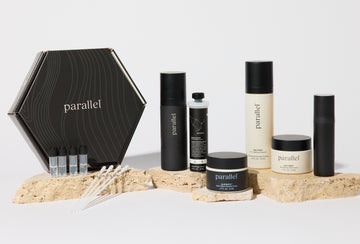
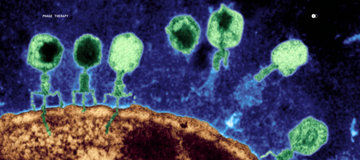
The process starts with the Scalp Health Test™, a quantitative whole-genome sequencing test that characterizes the bacteria living on your scalp and identifies whether you have microbial imbalances that may be contributing to inflammation and hair thinning. If results reveal an overgrowth of a specific bacterial species, you may be eligible for a custom phage serum: a natural precision formulation that uses bacteriophages (nano-microbes that target bacteria) to selectively reduce the offending organism without disturbing the rest of your microbiome. If phage therapy is not the right fit for your case, our medical dermatology team can instead identify a custom-compounded prescription tailored to your specific microbiome and clinical profile.
Insurance coverage for the MD-03 Protocol™ may be available in California. To check eligibility, email insurance@parallelhealth.io with your full name, date of birth, and insurance information.
Frequently Asked Questions
Q: Is hair thinning as I age just inevitable? A: Some degree of follicular aging is a natural biological process, but the rate and severity are not fixed. Scalp dysbiosis, inflammation, and nutrient status can all accelerate age-related thinning, and these factors are addressable. Parallel Health's MD-03 Protocol™ can help distinguish how much of your thinning is driven by microbiome imbalance versus aging alone, and chart a personalized treatment path accordingly.
Q: Can scalp dysbiosis cause hair loss on its own? A: Dysbiosis most commonly appears to be a contributing factor rather than a sole cause. It amplifies inflammation and disrupts the follicular immune environment, which can accelerate or worsen hair loss, particularly in individuals with genetic predispositions.
Q: Is alopecia areata contagious? A: No. AA is an autoimmune condition, not an infection. You cannot "catch" it from another person.
Q: Can diet affect scalp microbiome health? A: Yes. A diet rich in fiber, fermented foods, and diverse plant-based nutrients supports a healthy gut microbiome, which in turn influences skin and scalp health through the gut-skin axis.
Q: What's the difference between hair thinning and alopecia areata? A: Hair thinning (as in AGA) is typically diffuse and gradual. Alopecia areata presents as sudden, patchy, well-circumscribed areas of hair loss driven by an autoimmune mechanism.
Q: Should I see a dermatologist for hair loss? A: Yes. Early diagnosis matters, especially for scarring alopecias where delay can mean permanent follicle loss. A board-certified dermatologist can determine the type of hair loss and the most appropriate treatment strategy. Parallel Health offers access to medical dermatology through its MD-03™ teledermatology program, so you can get expert guidance from home.
Q: How do I know if I'm a candidate for Parallel Health's phage therapy? A: Start with the Scalp Health Test™ through the MD-03 Protocol™. If your results show bacterial overgrowth linked to inflammation or hair loss, our medical team will evaluate whether a custom phage serum is appropriate for your case.
Scientific References
- Carrington AE, Maloh J, Nong Y, Agbai ON, Bodemer AA, Sivamani RK. The gut and skin microbiome in alopecia: associations and interventions. J Clin Aesthet Dermatol. 2023;16(10):59–64. PMID: 37915336.
- Pinto D, Sorbellini E, Marzani B, et al. Scalp bacterial shift in alopecia areata. PLOS ONE. 2019. PMC6459526.
- Wang X, Li F, Sun Y, et al. Microbial dysbiosis and its diagnostic potential in androgenetic alopecia: insights from multi-kingdom sequencing and machine learning. mSystems. 2025. PMC12172500.
- Association between scalp microbiota imbalance, disease severity, and systemic inflammatory markers in alopecia areata. Dermatology and Therapy. 2024. doi:10.1007/s13555-024-01281-2.
- Bi D, et al. The causal relationship between gut microbiota and alopecia areata: a Mendelian randomization analysis. Front Microbiol. 2024;15:1431646.
- Xie WR, et al. Hair regrowth following fecal microbiota transplantation in a patient with alopecia areata: a case report. World J Clin Cases. 2019;7(19):3074–3081.
- Won EJ, Jang HH, Park H, Kim SJ. A potential predictive role of the scalp microbiome profiling in patients with alopecia areata: Staphylococcus caprae, Corynebacterium, and Cutibacterium species. Microorganisms. 2022;10(5):864.