






Your Body Odor Can Reveal Hidden Diseases: The Science of Scent-Based Diagnosis
Your skin microbiome may hold clues to your health that doctors are just beginning to understand.
For centuries, physicians relied on smell to diagnose patients. Hippocrates taught his students to sniff their patients' breath around 400 BCE. Today, cutting-edge research is confirming what ancient healers intuited: body odor can reveal disease—sometimes years before symptoms appear.
The Science Behind Disease Detection by Smell
Your body constantly emits volatile organic compounds (VOCs)—airborne molecules produced by metabolic processes, diet, and the bacteria living on your skin. When disease alters your cellular metabolism or microbiome composition, your VOC "fingerprint" changes.
Dogs trained to detect these disease-specific VOC patterns have achieved remarkable accuracy: 83-100% sensitivity for COVID-19 and similar success rates for various cancers, tuberculosis, and malaria. In clinical settings, electronic "noses" equipped with chemical sensors are approaching diagnostic accuracy rates of 86-90% for conditions including lung cancer, Parkinson's disease, kidney failure, and Crohn's disease.
The Parkinson's Discovery That Changed Everything
One of the most compelling examples comes from Joy Milne, a Scottish woman who noticed her husband developed a distinctive musky odor years before his Parkinson's diagnosis. Researchers at the University of Manchester confirmed her ability and identified 17 specific chemicals in sebum (the oily secretion from skin glands) that contribute to Parkinson's unique scent signature.
This discovery suggests that analyzing skin secretions could enable earlier detection—potentially before the neurodegeneration and motor symptoms like tremors begin.
The Bacterial Connection: Your Microbiome's Role in Disease Odors
Many disease-associated odors originate not just from altered human metabolism, but from changes in the skin microbiome itself.
Specific bacteria produce distinct odorous compounds. Here are just three, but there are many different bacterial families that have their own odor profiles:
- Corynebacterium species generate volatile fatty acids with "goat-like" and "cumin-like" odors
- Staphylococcus hominis produces thioalcohols responsible for the "onion-like" component of body odor
- Staphylococcus epidermidis converts leucine into isovaleric acid (the "cheesy" foot odor compound)
When disease disrupts the skin's ecosystem—through immune changes, altered sebum production, or shifts in pH—the bacterial community responds. These microbial population changes produce different VOC profiles that trained noses (biological or electronic) can detect.
Research has shown that individuals with malaria produce skin odors that make them more attractive to mosquito vectors—a change driven by alterations in the skin's microbial ecology. Scientists have even developed a Cancer Odor Database cataloging over 1,300 records of volatile organic metabolites associated with different cancers.
What This Means for Your Health
Understanding your unique microbiome composition isn't just about managing body odor—it's potentially a window into your overall health. As researchers develop more sophisticated tools to analyze skin VOCs and microbiome patterns, we move closer to a future where a simple skin swab could provide early warning signs for serious conditions.
FAQs
What is Parallel Health's Odor Discovery Test™?
The Odor Discovery Test™ by Parallel Health analyzes the bacteria and other microbes on your skin that are directly responsible for producing body odor. Using advanced microbiome sequencing technology, we identify the specific microbial species present in your armpit microbiome (other areas can also be tested) and how they contribute to your unique scent.
How does the test work?
You'll receive an at-home collection kit. Simply swab your underarm area following the included instructions and mail it back to our lab. Our team sequences and analyzes your skin microbiome, identifying the bacteria responsible for odor production—including species like Staphylococcus hominis, Corynebacterium, and others.
What will I learn from my results?
Your personalized report reveals which odor-producing bacteria dominate your skin microbiome, how your bacterial composition compares to population averages, and which compounds your microbiome is likely producing. This information helps you understand why you smell the way you do—not just mask the symptoms.
Can the test help me reduce body odor?
Yes. By understanding your specific bacterial profile, you can use targeted interventions. Parallel Health offers personalized microbiome skincare, custom Rx, and personal care recommendations based on your results, including products designed to rebalance your skin microbiome rather than simply covering up odors.
Is this test the same as a health screening?
The Odor Discovery Test™ focuses specifically on the bacteria, viruses, and fungi that produce body odor. While emerging research suggests connections between skin microbiome composition and overall health, this test is designed for understanding and managing body odor rather than diagnosing medical conditions.
What solutions or treatments do you have for body odor?
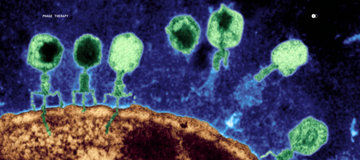
At Parallel, we specialize in phage therapy. Phages are nano-microbes that target specific bacteria that cause your issue, in this case, body odor. We also offer probiotics, prebiotics, and postbiotics to support a balanced microbiome. Lastly, for specific patients, we offer custom compounded sprays (by prescription only) for excessive sweating and body odor.
References
-
Shirasu M, Touhara K. The scent of disease: volatile organic compounds of the human body related to disease and disorder. J Biochem. 2011;150(3):257-266.
-
Bijland LR, Bomers MK, Smulders YM. Smelling the diagnosis: a review on the use of scent in diagnosing disease. Neth J Med. 2013;71(6):300-307.
-
Trivedi DK, Sinclair E, Xu Y, et al. Discovery of Volatile Biomarkers of Parkinson's Disease from Sebum. ACS Cent Sci. 2019;5(4):599-606.
-
Grandjean D, et al. Can the detection dog alert on COVID-19 positive persons by sniffing axillary sweat samples? A proof-of-concept study. PLoS One. 2020;15(12):e0243122.
-
Rudden M, Herman R, Rose M, et al. The molecular basis of thioalcohol production in human body odour. Sci Rep. 2020;10(1):12500.
-
Natsch A, et al. A broad diversity of volatile carboxylic acids, released by a bacterial aminoacylase from axilla secretions, as candidate molecules for the determination of human-body odor type. Chem Biodivers. 2006;3(1):1-20.
-
De Moraes CM, et al. Malaria-induced changes in host odors enhance mosquito attraction. Proc Natl Acad Sci USA. 2014;111(30):11079-11084.
-
Bauër P, Leemans M, Audureau E, et al. Remote Medical Scent Detection of Cancer and Infectious Diseases With Dogs and Rats: A Systematic Review. Integr Cancer Ther. 2022;21:15347354221140516.
- bacterial culturing ,
- body odor ,
- chronic inflammation ,
- deodorant ,
- functional health ,
- hidradenitis suppurativa ,
- microbial analysis ,
- microbiome engineering ,
- microbiome skincare ,
- odor discovery test ,
- odor microbiome ,
- personalized health ,
- scalp ,
- scalp microbiome ,
- sex and body odor ,
- sexual wellness ,
- skin microbiome