







Can You Use Copper Peptides with Retinol? The Science Behind Smart Formulation
by Parallel Health Team
If you've ever fallen down the skincare rabbit hole, you've likely encountered this question: Can copper peptides and retinol be used together? The internet is full of conflicting advice, with some sources warning against combining these powerhouse ingredients and others calling them a dream team. So what's the truth?
The short answer: yes, you can use copper peptides with retinol—but how they're formulated and how fresh they are when they reach your skin matters enormously.
Understanding the Ingredients
Copper peptides (specifically GHK-Cu) are naturally occurring compounds found in human plasma, saliva, and urine. GHK-Cu consists of three amino acids—glycine, histidine, and lysine—bound to a copper ion. Research published in the International Journal of Molecular Sciences demonstrates that GHK-Cu stimulates the synthesis of collagen, elastin, and glycosaminoglycans while supporting wound healing and skin regeneration.
What makes copper peptides particularly interesting is their mechanism of action. Unlike ingredients that work purely at the surface level, GHK-Cu signals fibroblasts (your skin cells) to produce more of the structural proteins that keep skin firm and resilient. Clinical studies have shown improvements in skin firmness of 20–30% after 12 weeks of topical GHK-Cu treatment.
Retinoids, on the other hand, are vitamin A derivatives celebrated for accelerating cellular turnover, stimulating collagen production, and addressing everything from fine lines to hyperpigmentation. Tretinoin (the prescription-strength form) remains the gold standard for anti-aging, though it can be irritating for many users.
Why the Confusion About Combining Them?
The caution around combining copper peptides and retinoids stems from two concerns. First, both ingredients can support skin's natural exfoliation mechanisms—meaning layering them without care could potentially increase sensitivity. Second, there are questions about pH compatibility and ingredient stability when used in the same routine.
However, as noted by researchers studying skin regenerative peptides, "copper peptides and retinols pair work extremely well together" when introduced correctly and used consistently. The key lies in thoughtful formulation and, critically, freshness.
Why Formulation Matters and Why Most Skincare Is Dead on Arrival
The skincare industry doesn't want you to know that many products on the shelf have already lost significant potency before you even open them.
Many of the most effective ingredients in skincare, including copper peptides and retinoids are notoriously unstable compounds. GHK-Cu is susceptible to enzymatic degradation, while retinoids break down when exposed to light, air, and temperature fluctuations. Research confirms that GHK-Cu has a short in vivo half-life of less than 30 minutes in plasma, and its stability in topical formulations depends heavily on how it's protected and preserved. Retinol faces similar challenges—oxidizing quickly when improperly formulated or stored.
This means that an expensive peptide or retinol cream sitting in a warehouse for months, shipped across the country, and displayed under fluorescent lights may contain only a fraction of the active ingredients listed on its label. It's skincare that's effectively dead on arrival.
This is why formulation strategy matters as much as ingredient selection. Balancing pH levels, choosing compatible ingredient combinations, utilizing advanced delivery systems like liposomal encapsulation, and minimizing oxidation are all critical to ensuring that what's on the label actually works on your skin. But even the most elegant formulation can't overcome the fundamental problem of time and degradation.
Our Approach at Parallel Health
At Parallel Health, we believe precision skincare demands precision at every step—from formulation to the moment a product reaches your hands.
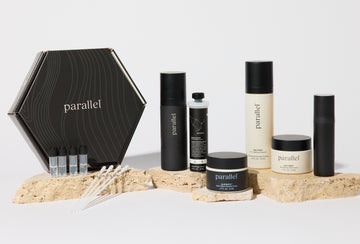
Our Blue Biotic™ Multi-Effect Peptide Cream, containing copper peptides, four other anti-aging peptides, and 29 additional skin longevity ingredients, is made fresh in small, hand-crafted batches at our lab in Los Angeles, California. We deliberately keep batch sizes small and use minimal preservatives, ensuring that every jar contains active ingredients at peak potency. This isn't mass production sitting in distribution centers for months; it's skincare formulated with the understanding that freshness directly impacts efficacy.
The same philosophy applies to our Custom Anti-Aging Rx, containing tretinoin in a bioavailable peptide base. Every prescription is compounded to order—by hand—at our pharmacy. Your formula isn't pulled from a shelf; it's made specifically for you, ensuring stability and potency from the moment it's created.
This approach addresses the copper peptide and retinol question from a fundamentally different angle. Yes, we formulate with ingredient compatibility in mind, balancing actives so they remain stable and work synergistically rather than against each other. But we also recognize that the best formulation in the world means nothing if the product has degraded by the time it reaches your skin.
When you pair the Blue Biotic™ with your Custom Anti-Aging Rx (found together in the Anti-Aging Duo), you're combining two products made with the highest level of care—each formulated for stability, each made fresh, each designed to deliver real results. The precision peptides support collagen and elastin synthesis, while the tretinoin accelerates cellular renewal. It's a complementary approach grounded in science and executed with craftsmanship.
This is precision skincare, made with the highest care.
FAQs
Can I apply copper peptides and tretinoin at the same time?
Yes—when using properly formulated, fresh products like our Blue Biotic™ Multi-Effect Peptide Cream and Custom Anti-Aging Rx. Both are formulated with ingredient stability in mind. Many of our patients use the sandwich method: Blue Biotic, then Anti-Aging Rx, then Blue Biotic again; this layered regimen is designed to work harmoniously.
Why do some sources say not to mix copper peptides with retinol?
This caution typically applies to poorly formulated or degraded products where both ingredients may be unstable or could increase skin sensitivity when layered. Fresh, thoughtfully formulated products address these concerns through proper pH balancing, compatible ingredient selection, and advanced delivery systems.
What results can I expect from combining these ingredients?
Studies show GHK-Cu can stimulate collagen production, while reducing fine lines and improving skin firmness. Combined with tretinoin's proven benefits for cellular turnover and collagen synthesis, users typically see improvements in skin texture, tone, and visible signs of aging within 8–12 weeks of consistent use. The Blue Biotic™ also contains four additional peptides that work synergistically to increase collagen production, reduce fine lines & wrinkles, and promote skin healing.
How does fresh, small-batch production make a difference?
Active ingredients like copper peptides and retinoids degrade over time, losing potency with exposure to air, light, and temperature changes. Mass-produced skincare may sit in warehouses and on shelves for months before reaching you. Small-batch, made-to-order production ensures you receive products with active ingredients at their most effective.
Are copper peptides better than retinol?
They work differently rather than competing. Research comparing GHK-Cu to retinoic acid found that the peptide stimulated collagen production with significantly less irritation. For optimal anti-aging results, using both allows you to leverage complementary mechanisms—peptides for regeneration and structural support, retinoids for cellular turnover and renewal.
References
- Pickart L, Margolina A. "Regenerative and Protective Actions of the GHK-Cu Peptide in the Light of the New Gene Data." International Journal of Molecular Sciences. 2018;19(7):1987.
- Pickart L, Vasquez-Soltero JM, Margolina A. "GHK Peptide as a Natural Modulator of Multiple Cellular Pathways in Skin Regeneration." BioMed Research International. 2015;2015:648108.
- Pollard JD, et al. "Effects of Copper Tripeptide on the Growth and Expression of Growth Factors by Normal and Irradiated Fibroblasts." Archives of Facial Plastic Surgery. 2005;7(1):27-31.
- Elsayed MMH, et al. "Liposomal systems as drug delivery vehicles for dermal and transdermal applications." Archives of Dermatological Research. 2011;303:603–619.
- Lee MS, et al. "Liposome-assisted penetration and antiaging effects of collagen in a 3D skin model." Journal of Cosmetic Dermatology. 2024;23(1):236-243.
- Pickart L, Margolina A. "Skin Regenerative and Anti-Cancer Actions of Copper Peptides." Cosmetics. 2018;5(2):29.