





Sudden Rosacea in Your 30s and 40s: Why it Happens and How to Find Your Root Cause
Many women who come to Parallel Health share the same story. Their skin was close to perfect for years. Then, in their 30s or 40s, redness, flushing and bumps appeared almost overnight, and nothing in their routine explained it. That pattern fits rosacea, which usually appears after age 30, is diagnosed more often in women, and affects roughly 5% of adults worldwide [2].
What Is Rosacea?
Rosacea is a chronic inflammatory condition of the central face. The National Rosacea Society now classifies it by features, since most people show more than one [1]. The four classic forms are:
- Erythematotelangiectatic: persistent redness, flushing, and visible blood vessels.
- Papulopustular: red bumps and pustules often mistaken for adult acne.
- Phymatous: thickened skin and enlarged pores, usually on the nose.
- Ocular: dry, gritty, irritated eyes and swollen eyelids.
Why Rosacea Can Start Suddenly
Rosacea develops when a reactive immune system meets the right triggers. People with rosacea produce excess cathelicidin, an antimicrobial peptide that drives redness and inflammation [3]. That sensitivity can sit in the background for years until something shifts the balance: pregnancy, postpartum or perimenopausal hormone changes, chronic stress, a new skincare routine, topical steroids, or a course of antibiotics that reshapes the skin and gut microbiome.
Your Root Cause Is Your Own
Two people with the same red cheeks can have very different drivers. People with rosacea often carry Demodex mites at higher densities [4], and a mite-associated bacterium, Bacillus oleronius, can provoke an immune response in papulopustular rosacea [5]. Our own data suggest Demodex may matter more than once thought, and we are studying it closely. In others, Staphylococcus epidermidis releases more inflammatory proteins at the warmer temperatures of flushed skin [6], or Corynebacterium kroppenstedtii is overrepresented [7]. Some patients improve after treating small intestinal bacterial overgrowth [8]. The skin microbiome links all of these, because it is where your immune system meets microbes every day.
Why Antibiotics Are Prescribed
Dermatologists often prescribe doxycycline, minocycline, topical metronidazole or ivermectin. Low-dose doxycycline (40 mg) works mainly by calming inflammation [9], and ivermectin cream targets Demodex [10]. These help many patients, but antibiotics act broadly, can disrupt beneficial microbes, and symptoms often return when treatment stops.
Phage as a Targeted Alternative
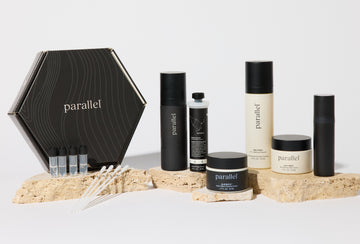
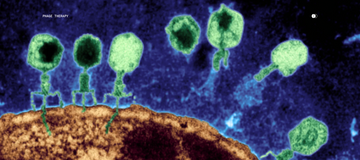
Phages are nano-microbes that each target specific bacteria while leaving the rest of the microbiome intact [12]. That precision means phages can be matched to the bacteria driving inflammation on your skin. This is the idea behind Microbiome Dermatology™: identify what is on your skin, then choose the most targeted approach, whether a Custom Active Phage Serum, a custom compounded Rx from our dermatologists, or both.
Lifestyle Triggers
Lifestyle factors do not cause rosacea alone, but they can trigger flares. The best documented are sun, heat, hot drinks, spicy food, intense exercise, stress, and alcohol; in a large study of US women, higher alcohol intake was linked to higher rosacea risk [11]. Daily sunscreen, gentle cleansing and a trigger diary help.
Know What Is on Your Skin
Parallel Health's skin microbiome testing uses whole-genome sequencing to identify bacteria, viruses, fungi, parasites and other microbes, delivering a Quantitative Microbial Analysis™ your dermatologist uses to build a plan around your skin.
Frequently Asked Questions
Can rosacea appear suddenly in your 30s or 40s?
Yes. It most often begins after 30, frequently following a hormonal change, a stressful period, or a new product or medication.
Is rosacea caused by bacteria?
Rosacea is driven by immune and vascular reactivity. Skin microbes, including Demodex-associated bacteria, can amplify that inflammation, and the mix differs between people.
Why is doxycycline prescribed if rosacea isn't an infection?
At low doses, doxycycline reduces the inflammation behind redness and bumps, with little antibacterial effect.
Can phages help with rosacea?
Phages are an emerging option that target specific bacteria without disrupting the wider microbiome. They work best when matched to bacteria found through skin microbiome testing. Parallel Health offers The MD-03 Rosacea Protocol™ for rosacea patients, which include telehealth with a board-certified dermatologist, alongside skin microbiome testing and custom phage therapy.
Can rosacea be cured?
There is no permanent cure, but knowing your triggers and microbial drivers can lead to long stretches of calm skin.
Scientific References
- Gallo RL, Granstein RD, Kang S, et al. Standard classification and pathophysiology of rosacea: the 2017 update by the National Rosacea Society Expert Committee. J Am Acad Dermatol. 2018;78(1):148-155.
- Gether L, Overgaard LK, Egeberg A, Thyssen JP. Incidence and prevalence of rosacea: a systematic review and meta-analysis. Br J Dermatol. 2018;179(2):282-289.
- Yamasaki K, Di Nardo A, Bardan A, et al. Increased serine protease activity and cathelicidin promotes skin inflammation in rosacea. Nat Med. 2007;13(8):975-980.
- Forton F, Seys B. Density of Demodex folliculorum in rosacea: a case-control study using standardized skin-surface biopsy. Br J Dermatol. 1993;128(6):650-659.
- Lacey N, Delaney S, Kavanagh K, Powell FC. Mite-related bacterial antigens stimulate inflammatory cells in rosacea. Br J Dermatol. 2007;157(3):474-481.
- Dahl MV, Ross AJ, Schlievert PM. Temperature regulates bacterial protein production: possible role in rosacea. J Am Acad Dermatol. 2004;50(2):266-272.
- Rainer BM, Thompson KG, Antonescu C, et al. Characterization and analysis of the skin microbiota in rosacea: a case-control study. Am J Clin Dermatol. 2020;21(1):139-147.
- Parodi A, Paolino S, Greco A, et al. Small intestinal bacterial overgrowth in rosacea: clinical effectiveness of its eradication. Clin Gastroenterol Hepatol. 2008;6(7):759-764.
- Del Rosso JQ, Webster GF, Jackson M, et al. Two randomized phase III clinical trials evaluating anti-inflammatory dose doxycycline (40-mg doxycycline, USP capsules) administered once daily for treatment of rosacea. J Am Acad Dermatol. 2007;56(5):791-802.
- Stein Gold L, Kircik L, Fowler J, et al. Efficacy and safety of ivermectin 1% cream in treatment of papulopustular rosacea: results of two randomized, double-blind, vehicle-controlled pivotal studies. J Drugs Dermatol. 2014;13(3):316-323.
- Li S, Cho E, Drucker AM, Qureshi AA, Li WQ. Alcohol intake and risk of rosacea in US women. J Am Acad Dermatol. 2017;76(6):1061-1067.
- Gordillo Altamirano FL, Barr JJ. Phage therapy in the postantibiotic era. Clin Microbiol Rev. 2019;32(2):e00066-18.