





Project Hail Mary, Phages, and the Quiet Scientist Trying to Save Your Skin
Andy Weir's sun-eating astrophages mirror a real microbial world living on your face. Ryan Gosling's Ryland Grace mirrors our own humble microbiologist on a Hail Mary mission to save your skin health.
A Movie About a Schoolteacher Saving the World With a Microscope
If you've seen Project Hail Mary, the 2026 Phil Lord and Christopher Miller film starring Ryan Gosling as middle school science teacher Ryland Grace, you already know the premise. The sun is dimming. A microscopic organism called astrophage is consuming our star's energy. Humanity has roughly thirty years before global cooling triggers mass extinction. Grace, a former molecular biologist who left research to teach kids about cells, is conscripted into a one-way interstellar mission to figure out why one star, Tau Ceti, is somehow resisting the infection.
It's a story about microbes deciding the fate of a planet, a scientist nobody took seriously being the one who must save us, and discovering that the answer is another microbe.
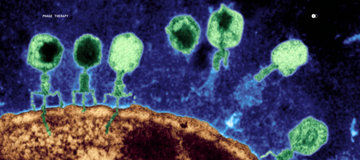
While astrophages are fictional, the idea that a microscopic predator can rebalance a runaway microbial system is not science fiction at all. It's the entire premise of bacteriophage therapy, and it's a core part of our foundation at Parallel Health.
What Astrophage Got Right (and Wrong)
In Andy Weir's novel and the film adaptation, an astrophage is a single-celled organism that absorbs solar electromagnetic radiation and uses carbon dioxide from Venus to reproduce. It's essentially a photosynthetic protist on cosmic steroids. The "fix," discovered jointly by Grace and his Eridian colleague Rocky, is Taumoeba, a natural predator that evolved to eat astrophage in the Tau Ceti system.
The science here is fictional, of course. There is no organism eating our sun. Photosynthesis at stellar surface temperatures isn't a thing. But the conceptual framework Weir uses — that a microbial population can run amok, and that the most elegant solution is often a microbial predator that already evolved to keep it in check — is one of the oldest and most replicable patterns in biology.
It's exactly what bacteriophages do every single day in and on your body, including on your skin.
Beneficial Real-World Predators, Bacteriophages
A bacteriophage (literally "bacteria-eater") is a nano-microbe that infects and kills bacteria. Phages are the most abundant biological entity on Earth, with an estimated 10³² particles globally, outnumbering every other organism combined. They've been quietly running the planet's microbial economy for at least three billion years.
Phages were independently discovered in 1915 by British microbiologist Frederick Twort and in 1917 by French-Canadian microbiologist Félix d'Herelle, who coined the term "bacteriophage" and pioneered their therapeutic use. Within two years of d'Herelle's discovery, he was successfully treating pediatric dysentery cases at the Hôpital des Enfants-Malades in Paris, the first documented clinical use of phage therapy in 1919.
Phage therapy spread globally in the 1920s and 1930s, particularly through the Eliava Institute in Tbilisi, Georgia, which d'Herelle co-founded with Georgian scientist George Eliava in 1933. Then penicillin arrived in the 1940s, antibiotics conquered the West, and phage therapy was largely abandoned outside the Soviet bloc — not because it didn't work, but because broad-spectrum antibiotics were faster, cheaper, and didn't require precision matching to specific bacterial strains.
That trade-off is now coming due as more and more people become resistant to antibiotics.
How Phages Can Save Lives and Reverse The Antibiotic Resistance Crisis
The World Health Organization has declared antimicrobial resistance one of the top ten global public health threats facing humanity. Methicillin-resistant Staphylococcus aureus (MRSA), multi-drug resistant tuberculosis, pan-resistant Acinetobacter baumannii, and fluoroquinolone-resistant Cutibacterium acnes are not hypotheticals. They are current clinical realities, and the crisis isn't limited to these strains.
In dermatology specifically, decades of topical antibiotic use for acne have driven C. acnes, the bacterium most traditionally associated with acne vulgaris, toward widespread resistance. Erythromycin and clindamycin, two of the most commonly prescribed topical acne antibiotics, now show resistance rates exceeding 50% in many populations. This is a problem now. It's one that started in the 1980s and has compounded ever since.
The Skin Is a Galaxy. Your Face Has a Solar System.
Your skin is home to thousands of species of bacteria, fungi, viruses, and mites — collectively called the skin microbiome.
We all have beneficial and issue-causing bacteria; we also have phages in our bodies and on our skin. Phages keep bacteria in check. A 2023 study in Science Advances by Wielscher and colleagues mapped the phageome (the ecosystem of phages) in normal versus inflamed human skin and demonstrated that phages are not passive bystanders; they actively shape which bacterial strains dominate, suppress, or coexist. If you don't have enough of the right phages, certain bacteria can overgrow, cause dysbiosis, and cause issues. Acne. Eczema. Rosacea. Folliculitis. Hidradenitis Suppurativa. Hair loss. Hyperpigmentation.
It's important to note, however, that bacteria, like phages, are essential. Many of the bacteria on your skin actively produce ceramides, antioxidants, short-chain fatty acids, and antimicrobial peptides that protect your barrier, regulate your pH, and defend against pathogens. You don't want them gone; you just want them in the right balance.
In the movie, astrophage is also essential. Yes, it is slowly killing the sun; but because it is so energetically powerful, it's what fuels the Hail Mary spacecraft itself. It's what gets Rocky back to Erid and eventually gets Grace home to Earth. Astrophage is dangerous in the wrong context, and indispensable in the right one. Bacteria work the same way. The problem isn't bacteria per se. The problem is the wrong bacteria, in the wrong amounts, in the wrong place.
In this way, astrophage is like bacteria overgrowing. And the Taumoeba, the microbe that restores balance, is like a precision bacteriophage.
What Real Science Actually Shows: Phages Engineer the Skin Microbiome
In 2022, Golembo and colleagues published results from a Phase 1 randomized clinical trial of a topical bacteriophage gel (BX001) targeting Cutibacterium acnes in 75 female subjects. The high-dose group showed a statistically significant reduction in facial C. acnes, without disrupting overall skin microbiome diversity. Translation: phages killed the targeted bacterial strains without nuking the surrounding ecosystem. Antibiotics cannot do this. They are blunt instruments; whereas, phages are scalpels.
In 2023, an Israeli research group published in Nature Communications the results of topical phage therapy in a C. acnes–induced acne-like lesion mouse model. Eight novel phages, isolated from acne patient skin samples, eradicated 100% of clinical C. acnes isolates and produced significantly improved clinical and histological scores compared to untreated controls, with reduced inflammation markers including CXCL2 and decreased neutrophil infiltration.
Engineered phage selectivity research from Knödlseder and colleagues at PLOS Pathogens (2022) demonstrated that C. acnes phages can be epigenetically imprinted to selectively target pathogenic strains while sparing commensal, healthy ones. This is precision medicine at the resolution of individual bacterial subpopulations on your face.
Our Very Own Humble Scientist
Now, a fun confession: when our team watched Project Hail Mary, we all walked out chuckling a bit. Somehow, it felt oddly familiar.
Ryland Grace isn't a hero in the traditional sense. He's a guy who left academic research because the politics burned him out, who teaches eighth-grade science because he loves the kids, and who gets dragged into saving humanity essentially because nobody else who could solve the problem was available. He spends most of the film alone, talking to himself, reasoning through problems with whiteboards and a chemistry set he cobbled together in zero gravity. His superpower isn't genius, per se; it's persistence, intellectual humility, and a refusal to give up when the problem looks unsolvable.
Our Co-Founder and Chief Science Officer, Dr. Nathan Brown, is, at risk of embarrassing him, that kind of scientist.
Nathan holds a PhD in Microbiology, did postdoctoral work at the National Cancer Institute and the University of Leicester, and was funded by the Gates Foundation and the Wellcome Trust. He has spent over two decades working on bacteriophage biology, skin microbiome metagenomics, and the computational frameworks that let us actually understand what phages and bacteria are doing to each other on human skin and other ecological systems. He is also one of the most genuinely humble people we've ever worked with-- the kind of scientist who'd rather spend a Saturday debugging a genome assembly pipeline than take a victory lap.
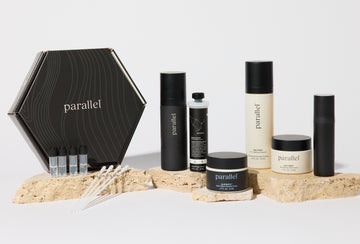
Parallel Health exists because Nathan and our team believe that the future of health is data-driven and personalized. For skin, it's precision Microbiome Dermatology™, characterizing what's actually living on your skin, identifying the strain-level dysbiosis driving your specific condition or aging, and deploying precision-matched phages and microbiome-supportive formulations to restore balance.
We have characterized over 10,000 microbial strains and have eight patents pending. We formulate and manufacture our microbiome skincare in-house. We provide custom-compounded prescriptions formulated and shipped directly to patients. We are in-network with Aetna, Cigna, and UnitedHealthcare in California, the first precision skin microbiome platform to achieve broad commercial insurance coverage.
We're not saving the sun. But we are, microbe by microbe, saving your skin.
Our skin is our largest organ, and it's worth protecting. If you have ever experienced a skin issue, you're not alone. More than 1 in 3 people globally suffer from a skin disease, according to the Pierre Fabre ALL study published in 2024, making dermatological conditions one of the most prevalent disease categories on the planet. Roughly 85% of people aged 12 to 24 experience at least minor acne. Atopic dermatitis affects up to 20% of children and 10% of adults. Rosacea affects roughly 5% of the global adult population. Psoriasis affects 1 to 3%. Hidradenitis suppurativa, folliculitis, seborrheic dermatitis, perioral dermatitis, etc. add to a long list of microbiome-adjacent inflammatory skin conditions, and the people affected by at least one of them across a lifetime is closer to a supermajority than a niche.
There's also the slow-burn condition that works against your skin longevity and affects literally every human being who lives long enough: inflammaging.
Inflammaging, a term coined in 2000 by Italian immunologist Claudio Franceschi, refers to the chronic, low-grade, systemic inflammation that develops with age, even in the absence of overt infection or disease. It's driven by accumulating senescent cells, immune system remodeling, and a steady drip of pro-inflammatory cytokines (IL-6, TNF-α, IL-1β) that gradually degrades tissue function across every organ system. In the skin, inflammaging shows up as collagen breakdown, barrier dysfunction, slower wound healing, hyperpigmentation, fine lines, sagging, and a heightened baseline susceptibility to every other inflammatory condition on this list. A 2025 review in Frontiers in Immunology explicitly linked skin microbiome dysregulation to inflammaging, noting that protective commensal species like Cutibacterium decline with age while pro-inflammatory taxa like Corynebacterium and Streptococcus expand — a microbial shift that alters skin pH, lipid composition, and barrier function, accelerating the very visible signs of aging that 80% of adults show by age 40.
In other words: aging skin is inflamed skin. And inflamed skin is, in large part, a microbiome problem.
The global anti-aging market is projected to reach roughly $80 billion by the early 2030s. The skincare industry overall is valued in the hundreds of billions. 100% of people have skin. Roughly 100% of people who live past forty are dealing with inflammaging whether they have a name for it or not. And the conventional toolkit – broad-spectrum antibiotics, retinoids, lasers, fillers — was built before we understood that the skin is an ecosystem.
Beyond the Movies
The reason Andy Weir's novel resonated with so many readers, and why the film is doing the box office numbers it's doing, isn't really the astrophage. It's the underlying belief that careful science, applied with humility and rigor, can solve problems that look existentially unsolvable.
We share this belief as our operating thesis of the company.
The skin microbiome is a new frontier in human biology. Until very recently, dermatology has treated the skin like a surface to be sterilized and exfoliated. The reality is that your skin is a living, dynamic ecosystem with its own predators, its own balance, and its own collapse modes. The tools to characterize and treat that ecosystem at strain-level precision did not exist ten years ago, but they do now.
TL;DR
- Astrophage is fictional. Bacteriophages are real, ancient, and the most abundant biological entity on Earth.
- Antibiotic resistance is the actual existential crisis in health, and it's been building for forty years with the overuse of antibiotics.
- Your skin is a microbial ecosystem, and it has its own native predator-prey dynamics that modern science can finally measure and modulate.
- Phage therapy works and published clinical trials show targeted bacterial reduction without ecosystem-wide disruption.
- Parallel Health is building the precision Microbiome Dermatology™ platform that turns these scientific advances into personalized care for actual patients.
Grace had to cross twelve light-years to figure out what was killing his sun and find the predator that could stop it. Your version is a lot shorter. Find out what's actually living on your skin, then match it with the right phage. Dr. Brown has spent the last decade building the science that lets you do both... from your bathroom.
Want to Know What's Actually Living on Your Skin?
Parallel Health offers at-home skin microbiome testing, custom-compounded prescription dermatology, and clinically validated cosmeceuticals — now covered in-network by UnitedHealthcare, Aetna, and Cigna in California.
Sign up for the MD-03 Protocol™.
References
- Weir, A. (2021). Project Hail Mary. Ballantine Books.
- Castillo, D. E., Nanda, S., & Keri, J. E. (2019). Propionibacterium (Cutibacterium) acnes Bacteriophage Therapy in Acne: Current Evidence and Future Perspectives. Dermatology and Therapy, 9(1), 19–31. https://doi.org/10.1007/s13555-018-0275-9
- Golembo, M., Puttagunta, S., Rappo, U., et al. (2022). Development of a topical bacteriophage gel targeting Cutibacterium acnes for acne prone skin and results of a phase 1 cosmetic randomized clinical trial. Skin Health and Disease, 2(2), e93. https://doi.org/10.1002/ski2.93
- Rimon, A., Rakov, C., Lerer, V., et al. (2023). Topical phage therapy in a mouse model of Cutibacterium acnes-induced acne-like lesions. Nature Communications, 14, 1005. https://doi.org/10.1038/s41467-023-36694-8
- Knödlseder, N., Nevot, G., Fábrega, M.-J., et al. (2022). Engineering selectivity of Cutibacterium acnes phages by epigenetic imprinting. PLOS Pathogens, 18(3), e1010420. https://doi.org/10.1371/journal.ppat.1010420
- Wielscher, M., Pfisterer, K., Samardzic, D., et al. (2023). The phageome in normal and inflamed human skin. Science Advances, 9(15), eadg4015. https://doi.org/10.1126/sciadv.adg4015
- Liu, J., Yan, R., Zhong, Q., et al. (2015). The diversity and host interactions of Propionibacterium acnes bacteriophages on human skin. The ISME Journal, 9(9), 2078–2093. https://doi.org/10.1038/ismej.2015.47
- Chanishvili, N. (2012). Phage therapy—history from Twort and d'Herelle through Soviet experience to current approaches. Advances in Virus Research, 83, 3–40. https://doi.org/10.1016/B978-0-12-394438-2.00001-3
- Wittebole, X., De Roock, S., & Opal, S. M. (2014). A historical overview of bacteriophage therapy as an alternative to antibiotics for the treatment of bacterial pathogens. Virulence, 5(1), 226–235. https://doi.org/10.4161/viru.25991
- Natarelli, N., Gahoonia, N., & Sivamani, R. K. (2023). Bacteriophages and the Microbiome in Dermatology: The Role of the Phageome and a Potential Therapeutic Strategy. International Journal of Molecular Sciences, 24(3), 2695. https://doi.org/10.3390/ijms24032695
- Lin, D. M., Koskella, B., & Lin, H. C. (2017). Phage therapy: An alternative to antibiotics in the age of multi-drug resistance. World Journal of Gastrointestinal Pharmacology and Therapeutics, 8(3), 162–173. https://doi.org/10.4292/wjgpt.v8.i3.162
- Richard, M.-A., Paul, C., Nijsten, T., et al. (2024). Prevalence of most common skin diseases in Europe: A population-based study. Journal of the European Academy of Dermatology and Venereology / Pierre Fabre ALL Project. (See also: Tan, J., et al. (2024). Epidemiology of acne and rosacea: A worldwide global study. Journal of the American Academy of Dermatology. https://doi.org/10.1016/j.jaad.2024.01.002)
- Franceschi, C., Bonafè, M., Valensin, S., et al. (2000). Inflamm-aging: An evolutionary perspective on immunosenescence. Annals of the New York Academy of Sciences, 908, 244–254. https://doi.org/10.1111/j.1749-6632.2000.tb06651.x
- Zhuang, Y., & Lyga, J. (2014). Inflammaging in skin and other tissues — the roles of complement system and macrophage. Inflammation & Allergy - Drug Targets, 13(3), 153–161. https://doi.org/10.2174/1871528113666140522112003
- Pilkington, S. M., Bulfone-Paus, S., Griffiths, C. E. M., & Watson, R. E. B. (2021). Inflammaging and the Skin. Journal of Investigative Dermatology, 141(4S), 1087–1095. https://doi.org/10.1016/j.jid.2020.11.006
- Bocheva, G., Slominski, R. M., & Slominski, A. T. (2025). Inflammaging: triggers, molecular mechanisms, immunological consequences, sex differences, and cutaneous manifestations. Frontiers in Immunology, 16, 1704203. https://doi.org/10.3389/fimmu.2025.1704203
- Wang, A. S., & Dreesen, O. (2018). Biomarkers of Cellular Senescence and Skin Aging. Frontiers in Genetics, 9, 247. https://doi.org/10.3389/fgene.2018.00247
- antibiotic resistance acne ,
- astrophage real science ,
- bacteriophage skin ,
- cutibacterium acnes phage ,
- microbiome dermatology ,
- phage therapy ,
- phage therapy acne ,
- precision skincare ,
- project hail mary ,
- skin microbiome ,
- skin microbiome health ,
- skin microbiome skincare ,
- skin microbiome testing