





Peptides Keep Your Skin Looking Young. The Microbiome Gives You the Edge.
by Parallel Health Team
If you've been following skin longevity science, you already know peptides work. The clinical data is unambiguous. The right peptides, in the right concentrations, in a formulation that actually delivers them into the skin, produce measurable reductions in wrinkle depth, visible improvements in firmness, and a smoother, more radiant complexion.
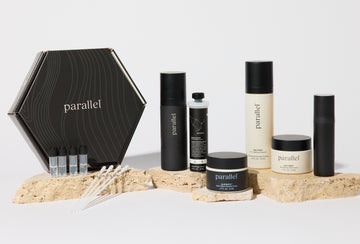
Based on this robust research, we built the Blue Biotic™ Multi-Effect Peptide Cream to deliver those outcomes in a single formulation: visible wrinkle reduction, improved firmness, and the smoother, more radiant complexion the clinical data points to.
But there's a second layer to skin longevity that most brands ignore, because most brands can't measure it. It's what separates skin that looks good now from skin that keeps looking good a decade from now. That layer is the skin microbiome, and when you pair peptide science with microbiome support, the results compound.
What Peptides Do, and Why the Data Is So Strong
Peptides are short chains of amino acids that act as biological signals. When they bind to receptors in your skin, they instruct cells to produce more collagen, build stronger elastin networks, repair damaged tissue, and relax the micro-contractions that carve fine lines into your face.
The Blue Biotic™ Multi-Effect Peptide Cream is built around powerful peptides:
- GHK-Cu (Copper Tripeptide-1) upregulates collagen types I, III, and VI, stimulates hyaluronic acid synthesis, and suppresses the enzymes that break collagen down.
- SNAP-8 (Acetyl Octapeptide-3) is clinically shown to reduce wrinkle depth by 63% in 28 days — mimicking the wrinkle-relaxing mechanism of neuromodulators without the injection.
- Matrixyl 3000, a two-peptide complex of Palmitoyl Tripeptide-1 and Palmitoyl Tetrapeptide-7, signals fibroblasts to behave like younger cells, rebuilding the extracellular matrix and reducing inflammation.
- Palmitoyl Tripeptide-38 (Matrixyl synthe'6) reduces main wrinkle volume by 21% and improves wrinkle surface area by 31% over two months.
These five peptides sit inside a formulation of 34 total actives, including topical creatine for cellular energy and beta-glucan for skin healing. Every one of these ingredients was selected to keep your skin looking younger, longer.
The Microbiome Edge: It's Not About Who's There, It's About What They're Doing
Where skin longevity takes a second leap forward is in the skin microbiome.
Your skin is home to a living ecosystem of microbes, and most microbiome testing will tell you which species are present. That's a useful start, but it stops short of two questions that actually matter for aging: how many of each microbe do you actually have and what are those microbes doing?
Parallel Health's Quantitative Microbial Analysis™ and Metabolic Microbiome Profiling™ were built to answer these questions. Using quantitative shotgun metagenomic sequencing, we characterize not just the composition of your skin microbiome, but also measure quantity and metabolic function.
The microbes on your skin can be working for you or against you. For example:
- Some bacteria produce ceramides and other lipids that reinforce your skin barrier and lock in hydration.
- Some bacteria metabolize compounds that provide UV protection, acting as a living layer of defense against photoaging.
- Some bacteria generate postbiotics that calm inflammation, support collagen, and protect the barrier.
Others tell a different story. The same skin can harbor strains that drive chronic, low-grade inflammation, a process called inflammaging that quietly activates the collagen-degrading enzymes your peptides are working to suppress. Peptides are actively building. Inflammaging is passively breaking down. Both can be happening in the same face at the same time.
This is why two people with identical routines can often get different results over the long run. The person whose microbiome is metabolically producing ceramides and postbiotics compounds every gain from their peptide cream. The person whose microbiome is metabolically producing inflammatory signals makes the same gains, but loses more of them to the invisible background process.
Knowing the metabolic function of your microbiome changes what you do about it. If your microbes are already producing antioxidant compounds, you can focus your routine elsewhere. If they're not producing enough ceramides, you know to supplement. If they're driving inflammation, you know to intervene at the source. This is how you choose the right products for your skin and fill the gaps your biology isn't filling on its own.
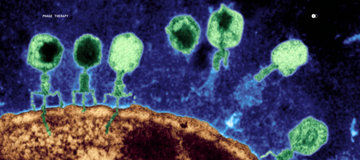
The MD-03 Protocol™ puts this science into practice. It delivers your Metabolic Microbiome Profile™ along with a physician-designed treatment plan that may include a Custom Active Phage Serum or Custom Compounded Rx to precisely target inflammatory strains while preserving the beneficial ones. The peptides keep doing what they already do. The microbiome protocol makes sure that the work counts and compounds.
That's the edge.
Frequently Asked Questions
Q: If the Blue Biotic™ works on its own, why would I add microbiome testing? A: Because skin longevity is a long game. Peptides give you visible results now. Understanding what your microbiome is metabolically doing — producing ceramides, generating UV protection, calming inflammation, or driving it — tells you which gaps your routine needs to fill and which your biology is already handling. You can absolutely start with Blue Biotic™ and add the MD-03 Protocol™ when you're ready to go deeper.
Q: How fast do results show up? A: Peptide results are typically visible in 4 to 8 weeks, with SNAP-8's 63% wrinkle reduction data measured at the 28-day mark. Microbiome rebalancing through the MD-03 follows a longer arc, with most patients seeing skin quality improvements in 8 to 12 weeks and continued gains over 6 months.
Q: Can I use the Blue Biotic™ with retinol, Tretinoin, Tazorac, or other prescription retinoids? A: Yes. The Blue Biotic™ is specifically designed to layer over retinoids as a final moisturizing step, supporting barrier repair alongside retinoid-driven cellular turnover. And if you want the strongest possible pairing, Parallel Health formulates compounded prescription retinoids in-house with additional peptides built into the base. You get a gentler formulation than standard Rx retinoids, with extra peptide support delivered in every application. Combined with Blue Biotic™ on top, it's a peptide-layered system working at both the prescription and cosmeceutical level.
Q: Is the Blue Biotic™ safe for sensitive or reactive skin? A: Yes. The formulation is fragrance-free, free of synthetic colorants, and made without traditional synthetic preservatives. The peptide and postbiotic actives are compatible with sensitized barrier states.
Ready to start?
Shop the Blue Biotic™ Multi-Effect Peptide Cream →
References
- Pickart L, Margolina A. Regenerative and Protective Actions of the GHK-Cu Peptide in the Light of the New Gene Data. Int J Mol Sci. 2018;19(7):1987.
- Challa AA, et al. Microbiome-Based Interventions for Skin Aging: Mechanisms and Clinical Evidence. Int J Mol Sci. 2025.
- Boyajian JL, et al. Probiotics, Prebiotics, Synbiotics and Other Microbiome-Based Interventions for Skin Aging. Ann Dermatol. 2025.
- Dimitriu PA, et al. New Insights into the Intrinsic and Extrinsic Factors That Shape the Human Skin Microbiome. mBio. 2019;10(4).
- Franceschi C, et al. Inflammaging: a new immune-metabolic viewpoint for age-related diseases. Nat Rev Endocrinol. 2018;14(10):576–590.
- Howard B, et al. Aging-associated changes in the adult human skin microbiome and the host factors that affect skin microbiome composition. J Invest Dermatol. 2022;142(7):1934–1946.
- Nakatsuji T, et al. A commensal strain of Staphylococcus epidermidis protects against skin neoplasia. Sci Adv. 2018;4(2):eaao4502.
- Baldwin HE, et al. The Role of Cutaneous Microbiota Harmony in Maintaining a Functional Skin Barrier. J Drugs Dermatol. 2017;16(1):12–18.
- accelerated aging ,
- aging ,
- chronic inflammation ,
- collagen production ,
- copper peptides ,
- creatine ,
- custom compounded prescriptions ,
- dermatologist-approved ,
- inflammaging ,
- MD-03 Protocol™ ,
- microbiome skincare ,
- peptide ,
- peptides ,
- personalized health ,
- probiotic skincare ,
- retinols ,
- skin longevity ,
- skin microbiome