






Peptides are everywhere right now. They're on TikTok feeds, in your dermatologist's clinic, in compounded vials sold by wellness clinics, and on the shelves of nearly every modern skincare brand. The category has exploded, but so has the confusion. Here is a clear look at what peptides actually are, why they are having a moment, where the controversy sits, and why at Parallel Health we use them topically rather than reaching for a needle.
What are Peptides?
A peptide is a short chain of amino acids, the same building blocks that make up every protein in your body. Insulin is a peptide. Collagen is built from peptide fragments. Your skin uses peptides as messengers that tell cells when to make collagen, repair damage, calm inflammation, or hold water in the barrier. Synthetic and bioidentical peptides are designed to mimic these natural signals.
In dermatology, the peptides with the strongest evidence include GHK-Cu (the copper tripeptide with decades of published data on wound healing, antioxidant defense, and collagen remodeling), the Matrixyl 3000 duo of palmitoyl tripeptide-1 and palmitoyl tetrapeptide-7 (which boost collagen synthesis while calming inflammatory signaling), palmitoyl tripeptide-38 (also known as Matrixyl Synthe'6, a matrikine that stimulates six structural components of the skin matrix including collagens I, III, and IV, fibronectin, hyaluronic acid, and laminin-5), and SNAP-8 (acetyl octapeptide-3, which gently modulates the SNARE complex involved in muscle micro-contractions that drive expression lines).
The Hype
The current peptide boom rides on the success of GLP-1 medications like semaglutide. Once consumers saw that a peptide drug could reshape metabolic health, the next question was obvious. What else can peptides do.
That curiosity opened the door to BPC-157 for healing, CJC-1295 and ipamorelin for growth hormone release, and dozens of compounded injectables marketed for recovery, longevity, and performance. Telehealth clinics moved fast, and the market followed.
The Controversy
Most injectable peptides outside of FDA-approved drugs sit in a gray zone. The FDA has flagged BPC-157, CJC-1295, and several others for the compounding pharmacy 503A category, citing the absence of adequate human safety data and concerns about manufacturing purity. The World Anti-Doping Agency bans BPC-157 outright. Independent testing of products sold as research peptides has repeatedly found inconsistent purity, dosing errors, and contamination.
This doesn't mean injectable peptides are inherently dangerous or useless. Some patients see real benefits under careful medical supervision, and a few of these compounds may earn formal approval as the science matures. But the current landscape combines genuine promise with real regulatory and quality risk. A balanced view recognizes both.
Not All Peptides are Created Equal
The word peptide is a chemical class. There are hundreds of distinct peptides used in medicine and skincare today, and many hundreds more in clinical and preclinical development. FDA-approved therapeutic peptides and proteins number well over 200, while published databases catalog more than 850 entries when you include drug variants. On top of that there are hundreds of cosmetic peptides and a long tail of research compounds sold online.
That breadth matters. Insulin is a peptide. So is a copper tripeptide for skin. So is a research compound made in a warehouse with no human safety data. The label peptide tells you the molecular structure, not whether the molecule is right for your body, your skin, your goals, or your safety profile. Choosing well means asking which specific peptide, at what dose, made by whom, with what evidence, and for what indication.
The economics make this even more important. Peptide injection clinics across California and New York routinely charge between 150 and 800 dollars per month for a single peptide protocol, with growth hormone secretagogue stacks like CJC-1295 and ipamorelin landing in the 500 to 800 range and recovery stacks combining BPC-157 with TB-500 running 600 to 1,400 per month. Weight loss stacks built around a GLP-1 plus additional peptides can exceed 1,000 dollars monthly. Independent third-party testing of products sold as research peptides has found that roughly one in five samples fails on identity, purity, or labeled dose. When the market is this large and this lightly regulated, the consumer carries the burden of verifying that they are getting the right peptide, clean, and at the right dose.
Why Parallel Uses Topical Peptides
At Parallel Health, our work in Microbiome Dermatology™ starts from a simple principle. Treat the skin where the biology lives. Most of the skin functions we want to improve, including collagen density, barrier integrity, hydration, and elasticity, are governed by cells and microbes in the dermis and epidermis. A topical peptide that is well-formulated, properly stabilized, and able to penetrate the stratum corneum can deliver its signal directly to those cells without a needle, without systemic exposure, and without regulatory ambiguity.
The clinical evidence for topical peptides is also strong. GHK-Cu has decades of published data on collagen synthesis, antioxidant activity, and barrier repair. Matrixyl 3000 has shown reductions in deep wrinkle area and improvements in skin tonicity in clinical evaluation. Palmitoyl tripeptide-38 (Matrixyl Synthe'6) has demonstrated stimulation of multiple matrix components in vitro and visible wrinkle improvement in clinical studies of sensitive skin. SNAP-8 has shown a 63% reduction in wrinkle depth over 28 days in topical formulations targeting expression lines.
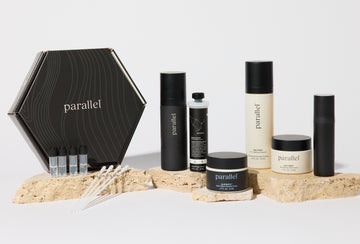
This is the foundation behind our Blue Biotic™ Multi-Effect Peptide Cream, which combines five clinically studied peptides—GHK-Cu, the Matrixyl 3000 duo of palmitoyl tripeptide-1 and palmitoyl tetrapeptide-7, palmitoyl tripeptide-38 (Matrixyl Synthe'6), and SNAP-8 (acetyl octapeptide-3)—with prebiotic and postbiotic actives to support both skin structure and the microbial ecosystem that sits on top of it. Each peptide was selected for a distinct mechanism: collagen and matrix remodeling, antioxidant and barrier support, and gentle modulation of expression lines. The goal is precision skin longevity that respects your microbiome, not a brute force intervention that ignores it.
We also take quality control very seriously. Parallel manufactures Blue Biotic™ in small batches in-house, which means we control formulation, stability, and finish at every step. Our peptides are sourced directly from trusted partners in the United States and established manufacturers in France, the same suppliers that produce the original Matrixyl ingredients. The formulation also includes proprietary actives produced in our own lab, drawn from years of microbiome research. In a category where independent testing routinely flags purity and dosing problems, knowing exactly where each peptide comes from and how the final product is made is the difference between a peptide cream that works and a peptide cream that just contains the word peptide on the label.
Is Injectable Right or Wrong For You
That depends on the indication, the prescriber, the source of the peptide, and your tolerance for working with compounds that lack full FDA approval. For metabolic or systemic conditions where an approved peptide drug exists, injectables can be transformative. For skin specifically, topical delivery reaches the relevant biology directly and avoids the quality and regulatory issues that surround compounded injectable peptides.
Frequently Asked Questions
Do topical peptides actually penetrate the skin? Properly formulated peptides can cross the stratum corneum and reach the cells where they signal collagen production and matrix remodeling. The palmitoylated peptides in Blue Biotic™, including palmitoyl tripeptide-1, palmitoyl tetrapeptide-7, and palmitoyl tripeptide-38, are specifically designed with a fatty acid chain that increases lipophilicity and improves dermal penetration. Formulation and delivery matter as much as the peptide itself, which is why in-house manufacturing and stability control are so important.
Are peptides safer than retinol? They have a different mechanism. Peptides are generally well-tolerated with low irritation, while retinol can cause redness, peeling, and sun sensitivity. The five peptides in Blue Biotic™, including GHK-Cu, the Matrixyl 3000 duo, palmitoyl tripeptide-38, and SNAP-8, have established cosmetic safety profiles and can be used alongside retinoids in a layered routine.
Is GHK-Cu the same as a copper supplement? No. GHK-Cu is a specific tripeptide that binds copper in a defined chemical structure. The copper alone does not produce the same signaling effects on skin cells.
Is BPC-157 in Blue Biotic™ or any Parallel Health product? No. BPC-157 is an injectable compound under FDA scrutiny, and it is not used at Parallel Health in any form. The Blue Biotic™ Multi-Effect Peptide Cream contains five well-characterized topical cosmetic peptides—GHK-Cu, palmitoyl tripeptide-1, palmitoyl tetrapeptide-7 (together forming Matrixyl 3000), palmitoyl tripeptide-38, and SNAP-8—each with established safety records and a clear regulatory pathway as cosmetic ingredients. Topical cosmetic peptides and injectable compounded peptides are entirely separate categories.
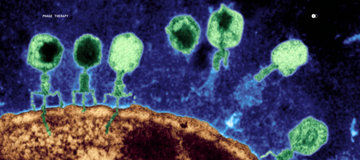
Can peptides replace a prescription treatment? Topical peptides support and maintain skin health. For active disease or significant concerns, a prescription protocol from a board-certified dermatologist is the right starting point. At Parallel Health our peptide products are designed to work alongside our phage therapy and prescription Microbiome Dermatology™ care.
How do I know if a specific peptide is right for me? Treat each peptide as its own decision. Ask what the published human evidence looks like, what the source and purity standards are, what dose is being used and why, what the indication is, and who is supervising. A peptide that is excellent for one indication may be wrong, unnecessary, or even unsafe for another. The class is large enough that no single rule covers all of it.
Where is Blue Biotic™ manufactured and where do the peptides come from? Parallel Health manufactures Blue Biotic™ in small batches in-house, which gives us direct control over quality, stability, and consistency. We source our peptides from trusted partners in the United States and established manufacturers in France, including the original suppliers of the Matrixyl ingredient family. The formulation also incorporates proprietary actives produced in our own lab, which is part of what makes the final product unique to Parallel. Small-batch in-house production also means we are not relying on a third-party contract manufacturer who is also making a hundred other formulations on the same line.
References
- Wang Y, Wang M, Xiao S, Pan P, Li P, Huo J. The anti-wrinkle efficacy of argireline, a synthetic hexapeptide, in Chinese subjects: a randomized, placebo-controlled study. American Journal of Clinical Dermatology. 2013;14(2):147-153. (Foundational SNARE-modulating peptide mechanism related to SNAP-8.)
- Pickart L, Vasquez-Soltero JM, Margolina A. The human tripeptide GHK-Cu in prevention of oxidative stress and degenerative conditions of aging: implications for cognitive health. Oxidative Medicine and Cellular Longevity. 2012;2012:324832.
- Pickart L, Margolina A. Regenerative and protective actions of the GHK-Cu peptide in the light of the new gene data. International Journal of Molecular Sciences. 2018;19(7):1987.
- Borkow G. Using copper to improve the well-being of the skin. Current Chemical Biology. 2014;8(2):89-102.
- Cha B, Lim S, Kim KY, et al. Method development for acetyl octapeptide-3 (SNAP-8) analysis by liquid chromatography-tandem mass spectrometry. Journal of Analytical Science and Technology. 2020;11:24.
- Errante F, Ledwoń P, Latajka R, Rovero P, Papini AM. Cosmeceutical peptides in the framework of sustainable wellness economy. Frontiers in Chemistry. 2020;8:572923.
- Schagen SK. Topical peptide treatments with effective anti-aging results. Cosmetics. 2017;4(2):16.
- Sikiric P, Seiwerth S, Rucman R, et al. Stable gastric pentadecapeptide BPC 157 in clinical trials and clinical practice. Current Pharmaceutical Design. 2024 (review covering regulatory and clinical context).
- Pai VV, Bhandari P, Shukla P. Topical peptides as cosmeceuticals. Indian Journal of Dermatology, Venereology and Leprology. 2017;83(1):9-18.
- Lintner K, Peschard O. Biologically active peptides: from a laboratory bench curiosity to a functional skin care product. International Journal of Cosmetic Science. 2000;22(3):207-218. (Foundational Sederma work on the Matrixyl matrikine peptide family, including the lineage leading to palmitoyl tripeptide-1, tetrapeptide-7, and tripeptide-38.)
Parallel Health is the pioneer of Microbiome Dermatology™, combining quantitative skin microbiome testing, in-house compounded prescriptions, and precision cosmeceuticals like the Blue Biotic™ Multi-Effect Peptide Cream. Take the Skin Discovery Test at parallelhealth.io to start your precision skin journey.