





TL;DR: Sweat is odorless. Body odor is created on the skin surface when bacteria convert odorless compounds in sweat into volatile molecules. The species capable of doing this are far more varied than the textbook account suggests, and the mix differs sharply from person to person. Washing more often does not change which bacteria you carry. Sequencing your skin microbiome identifies them.
Most people who struggle with persistent body odor are already doing everything "right." They shower twice a day, sometimes three. They scrub. They reapply deodorant at lunch. And by mid-afternoon, the smell is back.
That pattern points somewhere other than the shower. Human sweat leaves the body odorless. Smell is manufactured afterward, on the skin surface, by bacteria that break down odorless compounds in sweat into volatile molecules your nose registers as sharp, sour, or oniony.
Sweat Is Odorless. Bacteria Make It Smell.
Apocrine glands in the underarm secrete odorless precursor molecules, including a sulfur-containing compound called S-Cys-Gly-3M3SH. Bacteria carrying the right transporter and enzyme pull that precursor into the cell and cleave it into 3-methyl-3-sulfanylhexan-1-ol, one of the most recognizable thioalcohols in human body odor. A separate chemical route converts other precursors into short branched-chain fatty acids, the sharp, sour note. A third produces steroid-derived odors.
The Bacteria Behind Odor Are Far More Diverse Than Most People Are Told
The standard story names two culprits, Staphylococcus and Corynebacterium, and stops there. That story is an artifact of how the underarm was studied. Culture-based work only recovers organisms that grow on a plate, and 16S gene surveys usually cannot resolve past the genus level. Both methods systematically under-report anaerobes and low-abundance species.
When researchers moved to culture-independent methods, the picture widened immediately. Anaerococcus and Peptoniphilus, obligate anaerobes not previously recognized as normal skin residents, turned out to be significant members of the axillary community. One study identified 68 genera across a small cohort. Multiple Staphylococcus species beyond S. hominis, including S. haemolyticus and S. lugdunensis, metabolize the same odor precursor. In some people, the underarm is not dominated by either canonical genus at all. That's all to say, we all have unique scents because our skin microbiomes are like fingerprints: one of a kind.
Parallel Health's own sequencing data points in the same direction, and further. Across our odor testing population, the organisms associated with strong odor are strikingly wide-ranging, and two people with equally intense odor frequently often do not have the same bacterial species driving it.
That has a practical consequence. The same species can behave differently between individuals: in one dataset, different strains within the genus Staphylococcus correlated positively with odor in some people and negatively in others. Genus-level thinking is not merely incomplete here. It can point in the wrong direction.
This is the reason a single deodorant formula works beautifully for one person and does nothing for the next. The product is constant. The microbial target is not.
You Picked Up Your Odor Bacteria Somewhere
Your skin microbiome is acquired, not fixed at birth. Species arrive through contact with people, surfaces, gyms, travel, pets, and shared environments. A course of antibiotics, a move to a new climate, a new job, or an illness can all reshuffle the community. Someone can go 30 years without an odor concern and then acquire a strain that changes their scent profile within weeks. The bacteria are the variable that changed. Washing habits usually are not.
Harsh Cleansers and Deodorants Can Make It Worse
The standard responses can backfire. Aggressive antibacterial washing removes the broad, low-odor background community more efficiently than it removes the resilient specialists, which recolonize the emptied territory quickly. Antiperspirant use has been shown to increase axillary Actinobacteria, an unfavorable shift with respect to odor development. Product use measurably restructures the underarm community rather than sterilizing it.
High-pH soaps and alcohol-heavy formulas also compromise the skin barrier, and a disrupted barrier is a friendlier environment for opportunists. Scrubbing harder pushes the ecosystem further in the direction you are trying to escape.
The Better Approach: Find Out Which Bacteria You Carry
Because the responsible organisms vary so widely, guessing is a poor strategy. The productive first step is identifying the actual species and their relative abundance in your skin, not in a population average. Culture and swab-and-smell testing cannot resolve this. Whole-genome shotgun sequencing can, down to the strain level, alongside a readout of what those microbes are metabolically doing on the skin.
Once the odor-producing species are named, they can be addressed selectively. Researchers have proposed this direction for years: eliminate the odor-forming organisms while preserving the beneficial community, rather than carpet-bombing the whole ecosystem.
The MD-03 Body Odor Protocol™
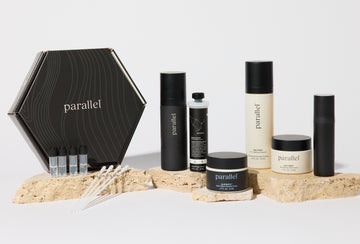
Parallel Health built the MD-03 Body Odor Protocol™ around that principle. It starts with the Odor Discovery Test™, a quantitative skin microbiome test that sequences your microbial community in your underarms, intimate areas, feet, or _______ (you choose!) and identifies the specific microbes producing your scent. From there, our Microbiome Dermatology™ team reviews your results with you and formulates a Custom Active Phage Serum, using precision nano-microbes selected to target your odor-causing bacteria while leaving beneficial species intact. Custom Compounded Rx are also available depending on your skin microbiome results.
No aluminum. No stripping. No masking. Just the removal of the organisms making the smell.
Explore the MD-03 Body Odor Protocol™ →
Frequently Asked Questions
Why do I still smell bad after showering? Showering removes surface residue and some bacteria, but odor-producing species live in sweat pores, hair follicles, and glands, and they recolonize the skin surface within hours. If your underarm community includes organisms that efficiently convert sweat precursors into volatile odor compounds, fresh sweat is converted almost as soon as it appears. The MD-03 Body Odor Protocol™ sequences your skin microbiome in the underarms or intimate areas to identify which species you carry and targets them directly.
Which bacteria cause body odor? More than most sources acknowledge Staphylococcus and Corynebacterium species odor causing bacteria, but culture-independent sequencing has shown that anaerobes such as Anaerococcus and Peptoniphilus are also significant contributors, and dozens of additional genera are present in the underarm. Parallel Health's sequencing data shows a similarly wide range across our odor testing population. Two people with equally strong odor often carry very different organisms, which is why an individual test is more informative than a general answer.
Does body odor mean I am unclean? No. Frequency of washing correlates poorly with odor intensity. Odor intensity tracks with the composition of your skin microbiome, which is shaped by acquisition, genetics, sweat chemistry, and product history.
Can deodorant make body odor worse over time? It can shift the community in an unfavorable direction. Antiperspirant use has been associated with increased Actinobacteria, the phylum containing the Corynebacterium species linked to strong odor. Product use restructures the underarm ecosystem rather than eliminating it.
How do I find out which bacteria are causing my body odor? Quantitative whole-genome sequencing of an underarm swab identifies the species present and their abundance. The Odor Discovery Test™ inside the MD-03 Body Odor Protocol™ provides this, along with a clinical review of what the results mean for you.
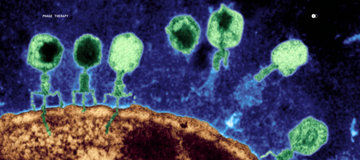
What are phages, and how do they help with body odor? Phages are naturally occurring nano-microbes that infect bacteria with extreme specificity. A phage selected against an odor-producing strain will clear that strain without disturbing neighboring beneficial species, which is the opposite of how antibacterial soaps work. Custom Active Phage Serums are the second step of the MD-03 Body Odor Protocol™.
How long does it take to see results? Results vary by individual. Many people notice a reduction in odor within the first several weeks, with the fuller picture emerging over 3-6 months.
Scientific References
- Minhas GS, Bawdon D, Herman R, Rudden M, Stone AP, James AG, Thomas GH, Newstead S. Structural basis of malodour precursor transport in the human axilla. eLife. 2018;7:e34995. doi:10.7554/eLife.34995
- Bawdon D, Cox DS, Ashford D, James AG, Thomas GH. Identification of axillary Staphylococcus sp. involved in the production of the malodorous thioalcohol 3-methyl-3-sulfanylhexan-1-ol. FEMS Microbiology Letters. 2015;362(16):fnv111. doi:10.1093/femsle/fnv111
- Troccaz M, Gaïa N, Beccucci S, Schrenzel J, Cayeux I, Starkenmann C, Lazarevic V. Mapping axillary microbiota responsible for body odours using a culture-independent approach. Microbiome. 2015;3:3. doi:10.1186/s40168-014-0064-3
- James AG, Austin CJ, Cox DS, Taylor D, Calvert R. Microbiological and biochemical origins of human axillary odour. FEMS Microbiology Ecology. 2013;83(3):527-540. doi:10.1111/1574-6941.12054
- Callewaert C, Kerckhof FM, Granitsiotis MS, Van Gele M, Van de Wiele T, Boon N. Characterization of Staphylococcus and Corynebacterium clusters in the human axillary region. PLoS One. 2013;8(8):e70538. doi:10.1371/journal.pone.0070538
- Urban J, Fergus DJ, Savage AM, Ehlers M, Menninger HL, Dunn RR, Horvath JE. The effect of habitual and experimental antiperspirant and deodorant product use on the armpit microbiome. PeerJ. 2016;4:e1605. doi:10.7717/peerj.1605
- Callewaert C, Hutapea P, Van de Wiele T, Boon N. Deodorants and antiperspirants affect the axillary bacterial community. Archives of Dermatological Research. 2014;306(8):701-710. doi:10.1007/s00403-014-1487-1
- Callewaert C, Lambert J, Van de Wiele T. Towards a bacterial treatment for armpit malodour. Experimental Dermatology. 2017;26(5):388-391. doi:10.1111/exd.13259
- Di Cicco F, Evans RL, James AG, Weddell I, Chopra A, Smeets MAM. Intrinsic and extrinsic factors affecting axillary odor variation. A comprehensive review. Physiology & Behavior. 2023;270:114307. doi:10.1016/j.physbeh.2023.114307